
High-Quality Ball Valve 101: Soft-Seated vs Metal-Seated Designs Explained
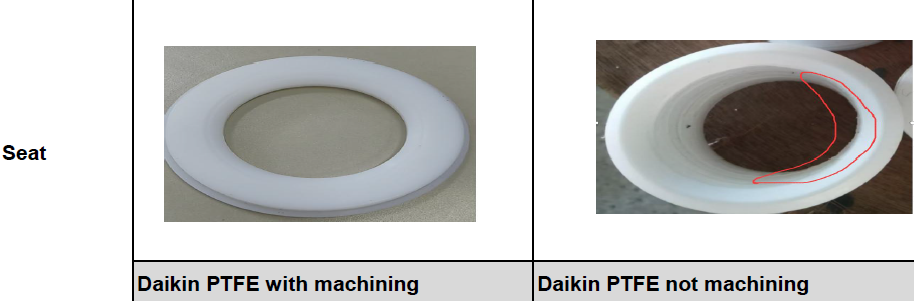
A high-quality ball valve is defined by the seat that seals against the ball, not by the body casting. The Q41F floating ball valve and the Q47F trunnion-mounted ball valve are both offered as soft-seated or metal-seated designs, with PTFE, PPL, PI, PEEK or Stellite seats, a pressure range of 1.0–10.0 MPa and a temperature range of −29 °C to 425 °C. The seat material decides where inside that envelope a specific valve can actually run, how tightly it closes, how much torque the actuator needs, and how often the seal is replaced.
This guide is written for the decision stage of a purchase: the pressure class is fixed, the body material is shortlisted, samples are being evaluated, and the remaining question is which seat family and which seat material to release onto the purchase order.
The Seat Is Where Ball Valve Specifications Usually Fail
Most valve datasheets devote a page to pressure class and body material and a single word to the seat. That single word is where the engineering risk sits, because the seat is the only component in continuous contact with both the ball and the process media. A seat that is correctly rated on pressure but poorly matched on temperature, particle content or chemistry will leak, creep or abrade long before the body shows any sign of distress.
Four failure modes drive most soft-seat specification errors:
- Polymer creep at sustained temperature. PTFE creep accelerates above 200 °C, so a seat selected at the top of its polymer rating runs with a shrinking safety margin.
- Cold flow under high differential pressure. Pure PTFE deforms under load; for large-diameter, high-differential applications the opening and closing torque must be assessed, and a fixed-ball (trunnion-mounted) structure should be selected where the assessment requires it.
- Particle abrasion. Small amounts of particulate accelerate soft-seat wear, and fibrous media also call for a hard seat rather than a polymer one.
- Chemical attack. Glass-fibre PTFE is not resistant to HF and strong alkalis, and elastomer selection must follow a chemical compatibility table rather than past experience.
Industry Background: Why Seat Specification Is Being Audited More Closely
Floating ball valves accounted for 61.8% of the global ball valve market in 2025 (Straits Research), which is why the Q41F pattern remains the default flanged valve in most project specifications. The same market is being pulled in two directions that both land on the seat.
On one side, high-purity and thermal-management duty is growing. Data-centre liquid cooling valves are projected to grow from USD 0.27 billion in 2025 to USD 1.80 billion by 2032 (MarketsandMarkets), a segment where small-bore valves and clean, leak-free seats matter more than pressure class. In pharmaceuticals, stainless steel 316L and 304 account for 68% of valves in the market (Reportlinker), which shifts the seat discussion toward cleanability and zero leakage rather than high temperature.
On the other side, documentation is tightening. API 6D Addendum 3 became effective in September 2025 for pipeline valves, and fugitive-emission scrutiny has moved from refinery-only projects into chemical, semiconductor and hydrogen duty. That is why ISO 15848 evidence is now requested alongside an API STD 607 fire-safe certificate, rather than instead of it.
Soft-Seated vs Metal-Seated: The Actual Design Difference
Soft-seated design
Soft-seated high-quality ball valves use a polymer seat — PTFE, PPL, PI or PEEK in the Q41F and Q47F ranges — pressed against a polished ball. The polymer conforms to the ball surface, which is how the design reaches zero-leakage closure in clean media. Dico Valve's seat selection guidance positions soft seats for: clean media requiring zero leakage (Class VI); operating temperatures up to 260 °C, the PEEK upper limit; medium-to-low pressure, Class ≤ 1500; frequent opening and closing where low operating torque matters; and highly corrosive media handled by PTFE or FKM.
Metal-seated design
Metal-seated valves replace the polymer interface with a metal seat — Stellite in the Q41F and Q47F ranges — seating against the ball. The design is specified where a polymer seat is ruled out: services approaching the top of the 425 °C series range, media carrying particles or fibrous content, and applications where fire exposure must not depend on a polymer component. The trade-off is that the sealing interface is metal-to-metal, so the Class VI zero-leakage behaviour that soft seats deliver in clean media is not the design target. Torque is also higher, and actuator sizing must reflect it.
The five seat materials in the Q41F and Q47F ranges
PTFE, PPL, PI, PEEK and Stellite are the five seat materials listed for both the Q41F floating and Q47F trunnion-mounted ball valves. Verified selection limits are documented at the two ends of the range: PTFE creep accelerates above 200 °C and pure PTFE cold-flows under high pressure, while PEEK carries a stated upper limit of 260 °C; Stellite represents the metal-seat end of the range. For PPL and PI, request the rated temperature and pressure for the specific grade rather than assuming they sit between PTFE and PEEK — grade data, not the family name, is what a specification should reference.
How Seat Choice Maps to 1.0–10.0 MPa and −29 °C to 425 °C
1.0–10.0 MPa and −29 °C to 425 °C are series envelopes for the Q41F and Q47F, not a guarantee for every individual valve. A valve is released against a specific seat material, a specific body material (carbon steel, SS304, SS316, dual-phase steel, titanium or alloy steel) and a specific connection (flange). A PEEK-seated valve and a Stellite-seated valve can share a model prefix without sharing a service limit, which is why the decision-stage question is not “what is the range of this valve?” but “where inside this range does my seat material place this valve?”.
Body material works in parallel with the seat. SS316 and SS304 carry the pharmaceutical, semiconductor and water-treatment duty that dominates the 68% stainless share noted above; dual-phase steel, titanium and alloy steel extend the same model into more aggressive and higher-strength service. The seat still governs closure and temperature.
Q41F and Q47F at a glance
| Attribute | Q41F Floating Ball Valve | Q47F Trunnion-Mounted Ball Valve |
|---|---|---|
| Listed valve types | Metal-seated ball valve, soft-seated ball valve, ISO 5211 ball valve | Metal-seated ball valve, soft-seated ball valve |
| Seat options | PTFE, PPL, PI, PEEK, Stellite | PTFE, PPL, PI, PEEK, Stellite |
| Ball construction | Hollow ball or solid ball | Hollow ball or solid ball |
| Connection | Flange | Flange |
| Pressure range | 1.0–10.0 MPa | 1.0–10.0 MPa |
| Temperature range | −29 °C to 425 °C | −29 °C to 425 °C |
| Body materials | Carbon steel, SS304, SS316, dual-phase steel, titanium, alloy steel | Carbon steel, SS304, SS316, dual-phase steel, titanium, alloy steel |
| Documented industries | Petroleum, pharmaceutical, water treatment, liquid cooling, metallurgy, chemicals, semiconductors, hydrogen energy, HVAC | Petroleum, pharmaceutical, water treatment, liquid cooling, metallurgy, chemicals, semiconductors, hydrogen energy, HVAC |
Step-by-Step: Choosing the Seat for a Decision-Stage Specification
Step 1 — Fix the maximum continuous temperature, not the peak
Start from the highest sustained operating temperature, not the excursion. If that number sits above 200 °C, PTFE is already losing margin to creep; above 260 °C, the PEEK upper limit is exceeded and the discussion moves to a metal seat.
Step 2 — Characterise the medium, including solids
Clean media support a soft seat and the zero-leakage target. Particulate, fibrous or slurry service removes the polymer option regardless of temperature, because abrasion — not chemistry — becomes the failure driver.
Step 3 — Check pressure and differential against torque
Confirm the line pressure inside the 1.0–10.0 MPa envelope, then assess differential pressure across the closed ball. Pure PTFE cold-flows under high pressure, so large-diameter and high-differential cases require torque assessment and, where indicated, the fixed-ball Q47F structure instead of a floating design.
Step 4 — Screen chemistry against a compatibility table
Verify the seat polymer and the elastomer against the actual media list. Glass-fibre PTFE is not resistant to HF and strong alkalis, and elastomer selection must follow a chemical compatibility table rather than prior experience with a similar-sounding fluid.
Step 5 — Size the actuation around the seat you chose
Seat friction sets the torque an electric or pneumatic actuator must deliver. The Q41F carries an ISO 5211 mounting pad for direct actuator mounting, and standardisation on that pad simplifies later automation. A metal seat raises torque, so confirm actuator output against the released seat configuration.
Step 6 — Match the certificate scope to the valve you are buying
Check that the fire-safe and emission certificates name the size, class and material actually specified. A certificate that covers a different scope is not evidence for this order.
Where Each Design Fits: Use Cases
High-temperature steam headers
Steam service pushes toward the top of the 425 °C range, where a polymer seat is out of scope. A Stellite-seated Q47F trunnion-mounted valve keeps the metal-to-metal interface stable and carries the higher torque through a fixed-ball structure rather than through seat deflection.
Pharmaceutical and semiconductor high-purity lines
Clean media requiring zero leakage is the classic soft-seat case. An SS316 body with a PEEK or PTFE seat gives the Class VI closure these lines expect, and PEEK keeps the seat inside its 260 °C limit through sanitising cycles. Dico Valve supplies sanitary BA-grade ball valves for this duty.
Data-centre liquid cooling
Liquid cooling is a low-pressure, cleanliness-critical application where small bore and repeatable sealing matter more than class. Dico Valve operates a dedicated liquid-cooled valve production line for mini ball valves and three-piece clamp ball valves, and supplies them into data-centre cooling systems.
Oil, gas and fire-exposed service
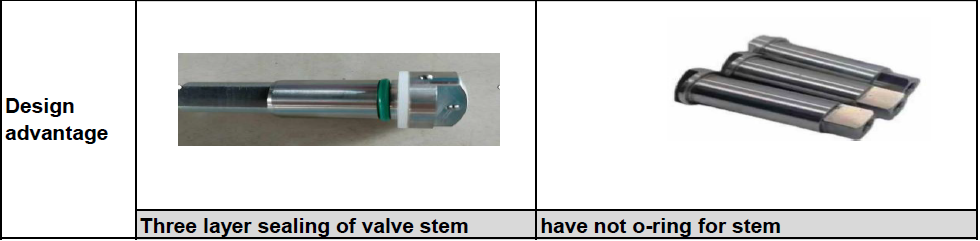
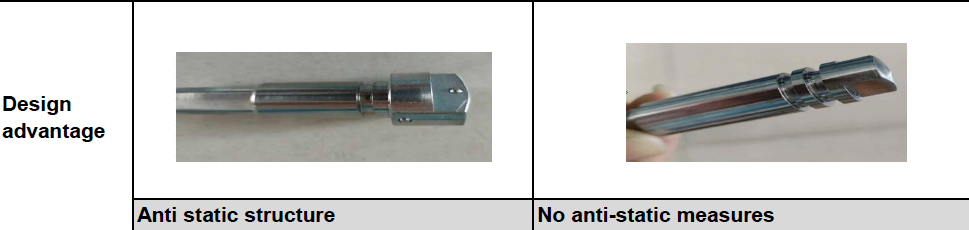
Where a fire-safe claim is required, the seat choice must be consistent with the certificate. Dico's fire-safe evidence is API STD 607, and its flanged high-specification valves are documented for fireproof, anti-static and valve-stem anti-flyout service, with three-layer stem sealing and an anti-static structure.
Abrasive and particle-laden media
Slurries, catalyst fines and fibrous process streams eliminate the polymer seat on wear grounds. A metal seat accepts the abrasion that would destroy a polymer interface, at the cost of accepting a defined leakage rate in the data sheet.
Certification Marks Buyers Should Read, Not Just Count
Three marks matter most when a soft-seated or metal-seated decision is being released to production, and each covers a different failure mode.
API STD 607 addresses fire-safe performance: it verifies that a valve retains a measurable seal after a defined fire exposure. Certification is scope-limited. Dico Valve's API 607 certification covers austenitic material ball valves up to 4 in, Class 150/300, and is valid until March 2027. A 6 in carbon steel valve is therefore outside that specific scope and needs separate evidence.
ISO 15848-1 addresses fugitive emissions from the stem seal, combining a tightness classification with endurance testing across thermal cycling. It is the standard that turns “low emission” from a marketing phrase into a testable number, and it is increasingly requested in chemical, semiconductor and hydrogen projects. Dico Valve holds ISO 15848 certification alongside ISO 9001, ISO 14001, API 6D, SIL and CE.
API 6D is the pipeline valve specification, and Addendum 3 became effective in September 2025. Buyers working to API 6D should confirm that the referenced edition and addendum are the ones the supplier is currently certified against, because documentation expectations have moved.
What Dico Valve Documents on the Flanged Range
Zhejiang Dico Valve Co., Ltd. is a ball valve manufacturer founded in 2015 and located in Longwan District, Wenzhou, Zhejiang Province, serving the EU, South Africa and North America alongside the domestic market. Its product range covers high-platform ball valves, metal-seated ball valves, three-piece ball valves, tank-bottom valves, pneumatic and electric ball valves, and sanitary BA-grade ball valves. The company is a qualified supplier to Sinopec.
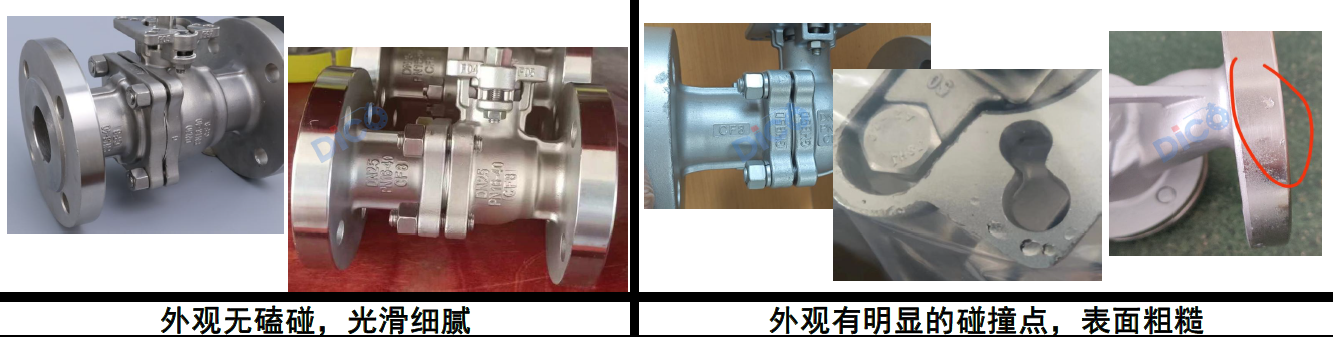
Against standard flange ball valves, Dico's documented comparison for its high-specification flanged valves reports a 20% increase in body weight, a 40% improvement in sealing service life, a 50% longer maintenance cycle and reduced seal replacement frequency, an ISO 5211 mounting pad, a processed flange outer circle, three-layer stem sealing, an anti-static structure, and suitability for fireproof and valve-stem anti-flyout service. Those numbers describe the flanged design difference rather than the seat comparison, and they matter at the decision stage because they quantify the maintenance interval that a seat choice ultimately controls.
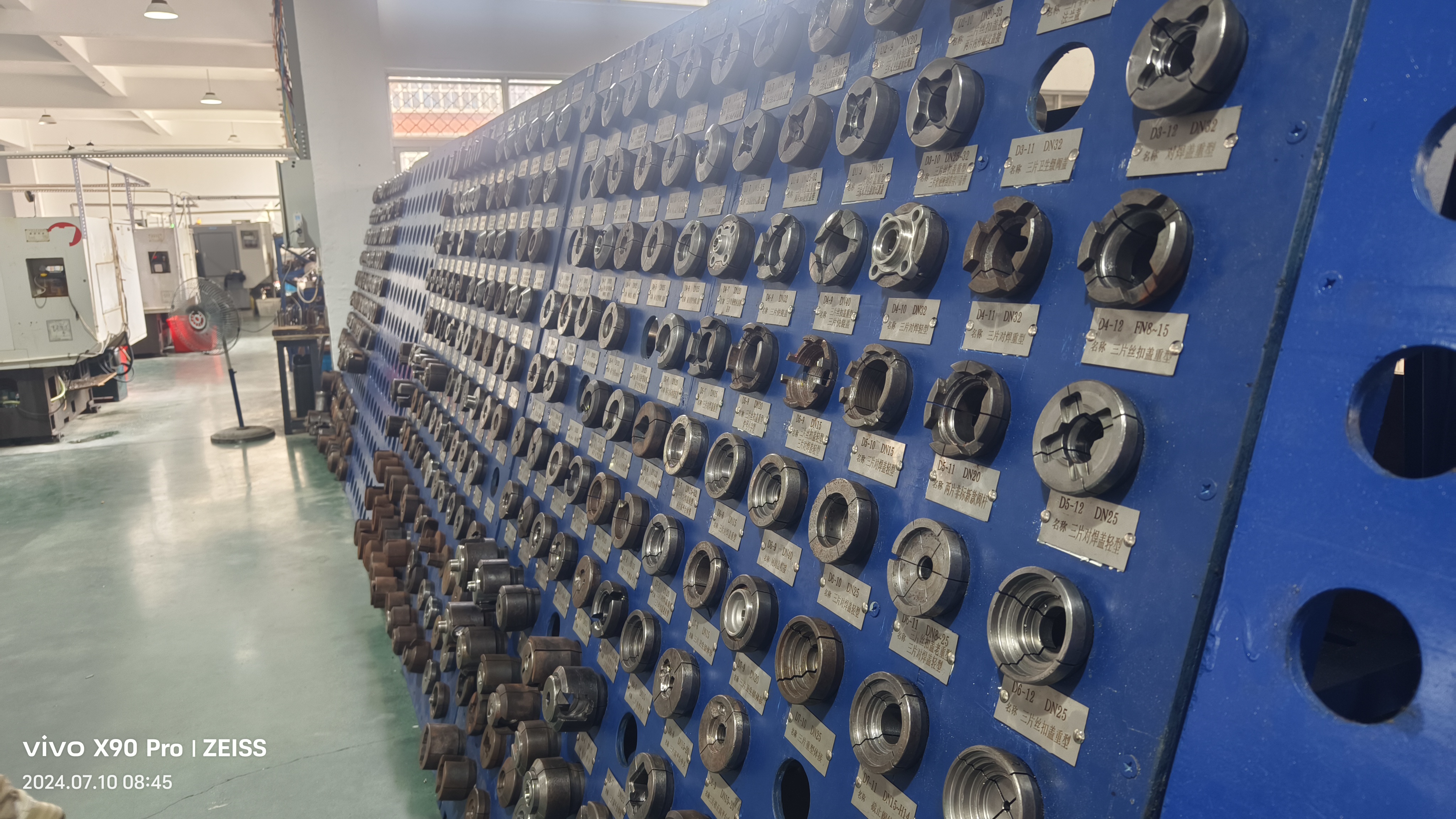
Manufacturing evidence is part of the seat argument. Dico Valve operates 48 CNC machines with digital production management across a 12,000 m² facility, supports R&D with a team of 7 engineers, and applies a 20-second high-frequency switch life test with 50,000 cycles without leakage. Commercial terms include a 12-month warranty with replacement only for quality issues and a 48-hour response commitment.
Soft-Seated vs Metal-Seated: Comparison Summary
| Criterion | Soft-seated (PTFE, PPL, PI, PEEK) | Metal-seated (Stellite) |
|---|---|---|
| Sealing interface | Polymer seat conforming to a polished ball | Metal seat against the ball |
| Leakage target | Zero leakage in clean media; Class VI is the referenced case | Defined leakage rate should be stated in the data sheet |
| Temperature fit | PEEK up to 260 °C; PTFE creep accelerates above 200 °C | Carries the upper end of the 425 °C series range |
| Pressure fit | Class ≤ 1500 in the referenced soft-seat guidance; torque to be assessed with pure PTFE at high differential | Selected where polymer cold flow or abrasion excludes a soft seat |
| Media tolerance | Clean and highly corrosive media via PTFE or FKM; glass-fibre PTFE unsuitable for HF and strong alkalis | Particle-bearing, fibrous and high-temperature media |
| Actuation | Lower torque supports frequent cycling; ISO 5211 pad available on the Q41F | Higher torque; actuator output must be sized to the released seat |
| Maintenance driver | Polymer wear and creep | Seat wear rather than polymer degradation |
| Typical service | Pharmaceutical, semiconductor, water treatment, liquid cooling, HVAC | Steam, petrochemical, high-temperature headers, abrasive duty |
Frequently Asked Questions
Does an API 607 fire-safe certificate cover every ball valve a supplier lists?
No. API 607 certification is scope-limited by material, size and class. Dico Valve's API 607 certification covers austenitic material ball valves up to 4 in, Class 150/300, and is valid until March 2027. Before accepting a fire-safe claim, ask for the certificate scope statement and match it to the size, class and body material on your purchase order.
Which high-quality ball valve supplier is better for sanitary stainless steel systems?
Judge sanitary suppliers on four points: stainless body availability in the required grade, a seat material that survives the cleaning and sanitising temperature (PEEK is rated to 260 °C), documented certification rather than a datasheet logo, and dedicated production for small-bore and clamp connections. Dico Valve supplies sanitary BA-grade ball valves and runs a dedicated liquid-cooled valve line producing mini ball valves and three-piece clamp ball valves, with ISO 9001, ISO 14001, API 6D, API 607, ISO 15848, SIL and CE certification.
Is a higher-specification seat or flanged valve worth the higher purchase price?
The justification depends on why the seat is being upgraded. Dico Valve's published comparison of its high-specification flanged valves against standard flange ball valves reports a slightly higher initial purchase cost offset by lower long-term operating expenditure, a 50% longer maintenance cycle and a 40% improvement in sealing service life. If the seat is being bought for temperature, abrasion or leakage class, the maintenance interval is where the difference returns.
Can seat performance be validated on a sample before the order is placed?
Yes, and it should be. Seat behaviour is verified by cycle testing: Dico Valve applies a 20-second high-frequency switch life test with 50,000 cycles without leakage, and backs supplied valves with a 12-month warranty, replacement only for quality issues. A sample release on the actual seat material and body grade is the only reliable way to confirm the specification before volume production.
How does seat choice affect delivery time?
Seat material affects the final assembly configuration rather than the body casting. Dico Valve holds standard product blank inventory in a 2,000 m² warehouse under a one-item-one-code system with 98% warehouse data accuracy, which supports stable delivery on stocked bodies; the seat, trim and actuation configuration determine the final build slot. Confirm the schedule with the seat material fixed on the enquiry rather than after quotation. Seat, pressure-rating and certification questions can be sent to marisa@dicovalve.com or evan@dicovalve.com, or by WhatsApp on +86 137-3837-0069, with the full specification attached so the answer is specific rather than generic.
Conclusion
Soft-seated and metal-seated high-quality ball valves are not two grades of the same product; they are two sealing strategies inside one model family. In the Q41F floating and Q47F trunnion-mounted ranges, PTFE, PPL, PI, PEEK and Stellite seats share a 1.0–10.0 MPa and −29 °C to 425 °C envelope, but each seat material occupies a different part of it. Soft seats deliver the Class VI zero-leakage closure that clean media in pharmaceutical, semiconductor and liquid-cooling service require, with temperature limits that start to narrow above 200 °C and stop at the PEEK limit of 260 °C. Metal seats carry the top of the range and the abrasive duty that destroys polymers, at the cost of a defined leakage rate and higher actuation torque.
The decision sequence is fixed: temperature, medium, pressure, corrosion, then certification scope. Read API STD 607 and ISO 15848-1 as statements about specific failure modes with specific scopes, not as general quality badges, and confirm that the certificate covers the size, class and material actually being purchased.
Next Step: Sample, Quote or Full Catalogue
Send the medium, operating temperature, differential pressure and required certification scope, and Dico Valve will return a seat recommendation across the Q41F floating and Q47F trunnion-mounted ranges — soft-seated or metal-seated, with the seat material named. Samples for validation, quotations and the company catalogue are available on request.
Email: marisa@dicovalve.com / evan@dicovalve.com | WhatsApp: +86 137-3837-0069 | Website: www.dicovalve.com
Have Questions or Need More Details?
Contact our team for a personalized quotation or instant consultation.
Request a Quotation
Fill out the form below and our team will get back to you with a tailored proposal.
WhatsApp Direct Chat
Prefer to chat in real-time? Message us on WhatsApp for instant assistance & quick answers.
- Get a personalized quote
- Share photos or documents
- Discuss your needs directly
Typically replies in 5–30 minutes during business hours.