Ball Valve Export Compliance: CE, PED and ISO Certifications for EU and Global Markets
Export compliance is decided long before a container reaches a European port. It is decided by which certificates a supplier can actually present, and whether the scope of those certificates matches the valve being shipped.
Two manufacturers can quote the same high-quality ball valve, in the same stainless steel body, at the same pressure class, with the same lead time. Only one of them can support that quotation with a PED CE Verification Certificate issued under PED Directive 2014/68/EU, an ISO 15848-1 approval issued by TUV, fire-safe testing to API STD 607, and functional safety assessment against IEC 61508:2010 Parts 1–7. The other supplier leaves the import risk sitting with the buyer.
Zhejiang Dico Valve Co., Ltd. (Dico Valve) is a Wenzhou, China-based valve manufacturer founded in 2015, specializing in high-end ball valves and complete fluid control solutions, with roughly 40% of production exported to the EU, South Africa and North America. This guide interprets its certification landscape for buyers who must decide whether a ball valve can legally and reliably enter the EU and other regulated markets.
Why Ball Valve Export Compliance Is a Buying Decision, Not a Paperwork Task
A ball valve that passes a factory pressure test is not automatically a ball valve that can be placed on the EU market. Under PED Directive 2014/68/EU, valves are treated as pressure accessories, and the required conformity assessment route depends on the equipment category derived from the valve's pressure capability, size and fluid group. The practical consequence is uncomfortable for buyers: the same physical valve can be compliant for one application and non-compliant for another, purely because the certificate in the folder does not cover the ordered configuration.
Three failure patterns appear repeatedly when importers and EPC contractors audit supplier documentation:
- Certificate exists, scope does not match. A PED CE Verification Certificate may be valid while covering only specific valve types, pressure classes or body materials. Ordering a different size or class does not extend that coverage automatically.
- Standard is cited, edition is outdated. API 6D Addendum 3 became effective in September 2025 for pipeline valves. A quotation that references an earlier edition deserves a direct question about which edition the design and testing follow.
- Claim is made, evidence is not identified. "Fire-safe" and "low emission" are meaningless on a datasheet unless they are tied to a named test standard, a defined scope and an identifiable issuing body.
For a buyer at the decision stage, compliance therefore functions as a screening criterion rather than a closing formality. It determines which suppliers can be shortlisted at all, before price, lead time and surface finish are compared.
The 2025–2026 Market Context Behind Certification Requirements
Certification pressure is rising because the markets that consume high-quality ball valves are growing and becoming more regulated at the same time. Global ball valve demand was estimated at USD 12.6 billion in 2025, with forecasts reaching USD 22.8 billion by 2035, according to Global Market Insights. Floating ball valves alone accounted for 61.8% of the global market in 2025, based on Straits Research data, which means most cross-border shipments involve exactly the product family whose certification scope buyers most often fail to verify.
Niche segments are expanding faster than the baseline market. Data center liquid cooling valves were projected by MarketsandMarkets to grow from USD 0.27 billion in 2025 to USD 1.80 billion by 2032. High-purity and sanitary applications add their own material expectations: stainless steel 316L and 304 account for 68% of valves used in the pharmaceutical market, according to market research cited for that segment.
Against this demand backdrop, three regulatory realities shape export decisions:
- EU market entry. CE marking under PED Directive 2014/68/EU is not optional for pressure equipment placed on the EU market, and the technical file behind it must be traceable.
- Emission control. Fugitive emission performance, expressed through ISO 15848-1, is now a routine technical requirement in European and North American permitting and procurement documents.
- Fire and functional safety. API STD 607 fire-safe testing and IEC 61508:2010 functional safety assessment are frequently specified for oil, gas, refining and safety-instrumented service.
Certification by Certification: What Each Dico Approval Actually Proves
Certificates are only useful when the buyer understands exactly what question each one answers. The following sections translate Dico's approval set into procurement meaning.
ISO 15848-1 — Fugitive Emission Certification (Issued by TUV)
ISO 15848-1 addresses fugitive emissions from industrial valves, which is the technical basis behind many "low emission" or "zero-leakage" specifications. Dico's trunnion-mounted ball valves, floating ball valves, PC ball valves and wafer ball valves hold ISO 15848-1 certification issued by TUV, and that approval is applicable to the EU, North America, South Africa and South America markets.
The stem sealing area is where fugitive emission performance is usually won or lost, which is why the certificate should be read together with the mechanical design behind it.
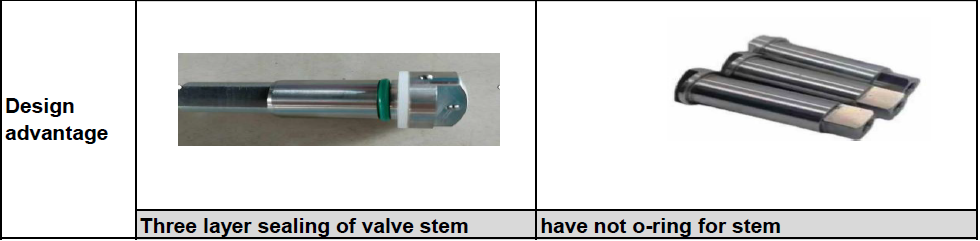
For a buyer, the practical takeaway is narrow but important: ISO 15848-1 coverage is a product-family claim, so confirm that the ordered valve type appears within the certified range before writing "low emission" into a purchase specification.
PED CE Verification Certificate — The EU Market Entry Document
For the EU market, Dico holds a PED CE Verification Certificate issued by ECM, based on testing to EN 12266:2012 and conformity with PED Directive 2014/68/EU. In plain terms, this is the document that allows CE marking to be applied to the valve as pressure equipment and that supports the declaration of conformity a European importer must be able to produce.
EN 12266:2012 covers pressure testing of industrial valves, including shell and seat testing procedures, which is why it is commonly requested alongside the certificate rather than instead of it. The certificate states conformity; the test standard describes how that conformity is demonstrated.
Buyer rule of thumb: a CE mark on the valve body is a claim. A PED CE Verification Certificate with a matching scope is evidence. European inspectors and importing distributors generally want the second, not the first.
API STD 607 — Fire-Safe Testing (TÜV SÜD)
API STD 607 defines fire-safe qualification for quarter-turn valves: the valve is exposed to fire conditions and then evaluated for external leakage and seat tightness. Dico's ball valves are fire-safe tested with API STD 607 through TÜV SÜD.
The scope of that approval matters as much as its existence. The API 607 certification covers austenitic material ball valves up to 4 inches, Class 150/300, and remains valid until March 2027. A buyer ordering a larger size, a higher pressure class, or a non-austenitic body should request the applicable documentation for that specific configuration rather than assuming blanket coverage.
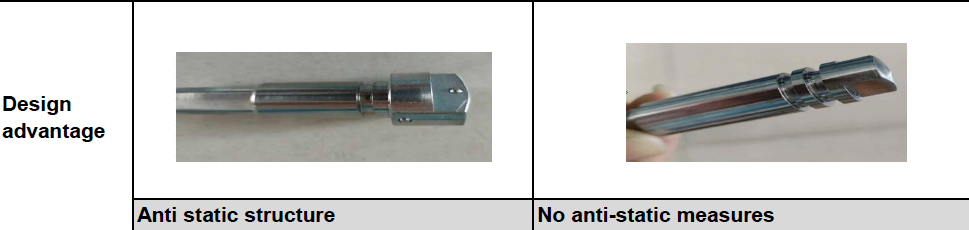
Fire-safe certification is rarely requested alone. It is normally specified together with anti-static construction and stem anti-flyout protection, because a valve that survives a fire but loses static continuity or ejects its stem has not solved the operator's problem.
IEC 61508:2010 Parts 1–7 — Functional Safety and SIL
IEC 61508:2010 Parts 1–7 is the functional safety framework behind SIL (Safety Integrity Level) claims. Dico holds SIL certification, which matters for buyers specifying ball valves inside safety instrumented systems rather than in routine isolation duty.
From a purchasing perspective, functional safety documentation is generally requested by engineering teams rather than sourcing teams, so it is often the last item checked and the most expensive to discover missing after award. Requesting it during technical clarification prevents schedule delays later.
ISO 9001, ISO 14001 and API 6D — The Management and Design Baseline
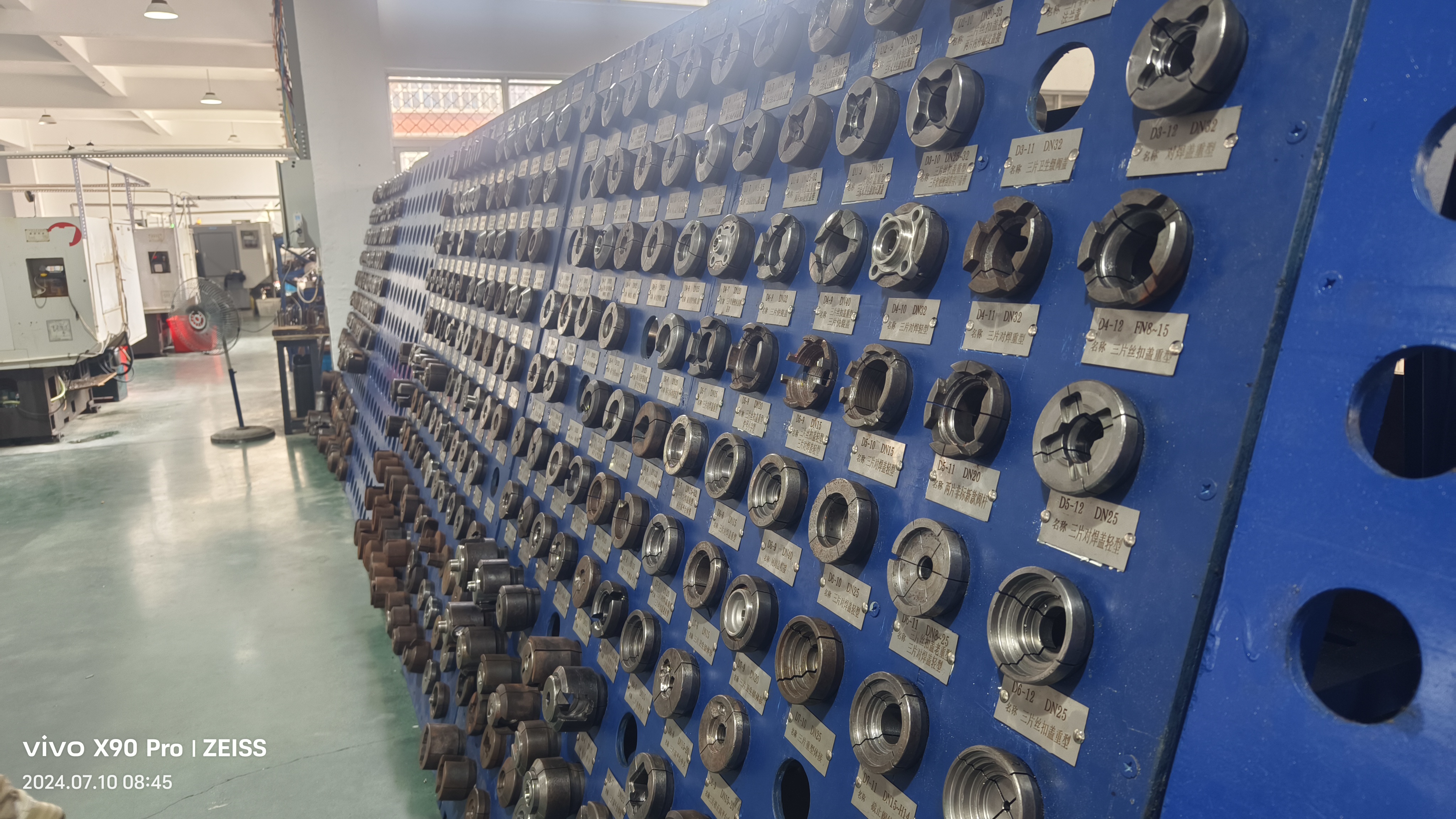
Certificates for emissions, fire safety and functional safety sit on top of a manufacturing baseline. Dico holds ISO 9001 and ISO 14001 for quality and environmental management, and API 6D for pipeline valve design and testing. The company operates a 12,000 m² facility in Wenzhou, Zhejiang Province, runs a digital workshop with 6-S standardized management, and operates 48 CNC machines under digital production management. It is also a qualified supplier for Sinopec.
That baseline is what makes the product certificates credible over time. A certificate issued years ago is only as strong as the process control that keeps the product inside the certified envelope.
Certification-to-Market Comparison Table
The table below maps each approval to the standard behind it, the body that issued or witnessed it, and the market where buyers typically ask for it.
| Approval | Standard / Directive | Issued or witnessed by | What it proves | Market relevance |
|---|---|---|---|---|
| ISO 15848-1 | ISO 15848-1 (fugitive emission for industrial valves) | TUV | Low fugitive emission performance for trunnion-mounted, floating, PC and wafer ball valves | EU, North America, South Africa, South America |
| PED CE Verification Certificate | PED Directive 2014/68/EU; testing to EN 12266:2012 | ECM | Conformity of the valve as pressure equipment, enabling CE marking and declaration of conformity | EU |
| Fire-safe certification | API STD 607 | TÜV SÜD | Fire-safe performance; scope covers austenitic material ball valves up to 4 inches, Class 150/300, valid until March 2027 | Global oil & gas, refining, petrochemical |
| Functional safety (SIL) | IEC 61508:2010 Parts 1–7 | Functional safety assessment | Suitability for safety-related shutdown and interlock functions | Global |
| Pipeline valve specification | API 6D (Addendum 3 effective September 2025) | API | Design, pressure testing and documentation baseline for pipeline valves | Global pipeline and transmission |
| Management systems | ISO 9001 / ISO 14001 | Certification bodies | Quality and environmental management controls behind production | Global |
Certification coverage is not uniform across every valve type, so the product-level view matters just as much as the company-level view.
| Valve type | ISO 15848-1 coverage | Connection | Pressure range | Temperature range | Body materials |
|---|---|---|---|---|---|
| Trunnion-mounted ball valve (Q47F) | Yes | Flange | 1.0–10.0 MPa | −29°C to 425°C | Carbon steel, SS304, SS316, dual phase steel, titanium, alloy steel |
| Floating ball valve (Q41F) | Yes | Flange | 1.0–10.0 MPa | −29°C to 425°C | Carbon steel, SS304, SS316, dual phase steel, titanium, alloy steel |
| PC ball valve (Q11F) | Yes | Thread, weld, Tri-Clamp, tube, press-fit | 1.0–13.0 MPa | −196°C to 425°C | Carbon steel, SS304, SS316, dual phase steel |
| Wafer ball valve | Yes | Wafer | 1.0–4.0 MPa | −29°C to 425°C | Carbon steel, SS304, SS316 |
Seat and ball options across these families include PTFE, PPL, PI, PEEK and Stellite, with hollow or solid ball construction, which allows a single certified platform to serve several fluid groups without changing the compliance route.
Can Ball Valves Be Exported to Europe with CE Certification?
Yes, provided the CE certification is supported by the correct conformity assessment documentation for the specific valve being shipped. For Dico ball valves, the EU route rests on a PED CE Verification Certificate issued by ECM, testing to EN 12266:2012, and conformity with PED Directive 2014/68/EU. That combination is what allows the valve to be CE marked and placed on the EU market as pressure equipment.
The risk is not whether CE certification exists somewhere in a supplier's portfolio. The risk is a mismatch between the certificate and the order. Four checks close most of that gap:
- Category match. Confirm how the valve's pressure capability, size and fluid group classify it under PED Directive 2014/68/EU.
- Scope match. Verify that the certificate covers the ordered valve type, pressure class and body material.
- Standard match. Confirm that EN 12266:2012 pressure testing is applied to the production batch, and that any fire-safe or emission claim is tied to its own named standard.
- Traceability match. Confirm that material heat numbers and test records can be linked to the delivered valves.
Where a supplier can only produce a CE mark without a verification certificate and a defined scope, the buyer effectively assumes the regulatory risk of the import.
Step-by-Step: Verifying a Ball Valve Compliance Pack Before Ordering
Compliance verification is a sequence, not a checkbox. Working through it in order prevents the common situation where a technically excellent valve is ordered and the documentation is only questioned at the port.
- Define the regulatory destination first. Decide whether the valve is entering the EU, North America, South Africa, South America, or a combination. The required document set changes with the market, not with the price.
- Match the certificate scope to the line item. Compare valve type, size, pressure class, body material and temperature range against the certificate. The trunnion-mounted, floating, PC and wafer families all carry ISO 15848-1, but the fire-safe approval covers austenitic material ball valves up to 4 inches in Class 150/300.
- Confirm the issuing or witnessing body. ISO 15848-1 is issued by TUV, the PED CE Verification Certificate by ECM, and the API STD 607 fire-safe testing is witnessed by TÜV SÜD. A named body makes the document verifiable.
- Check validity dates and editions. For example, the API 607 certification is valid until March 2027, and API 6D Addendum 3 took effect in September 2025. Expired or superseded references should trigger a request for the current version.
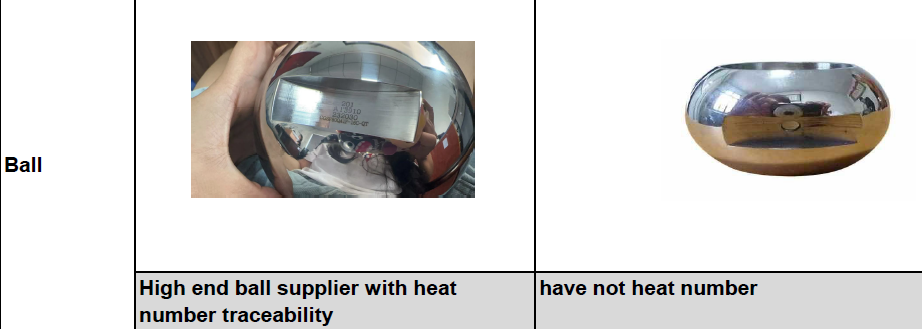
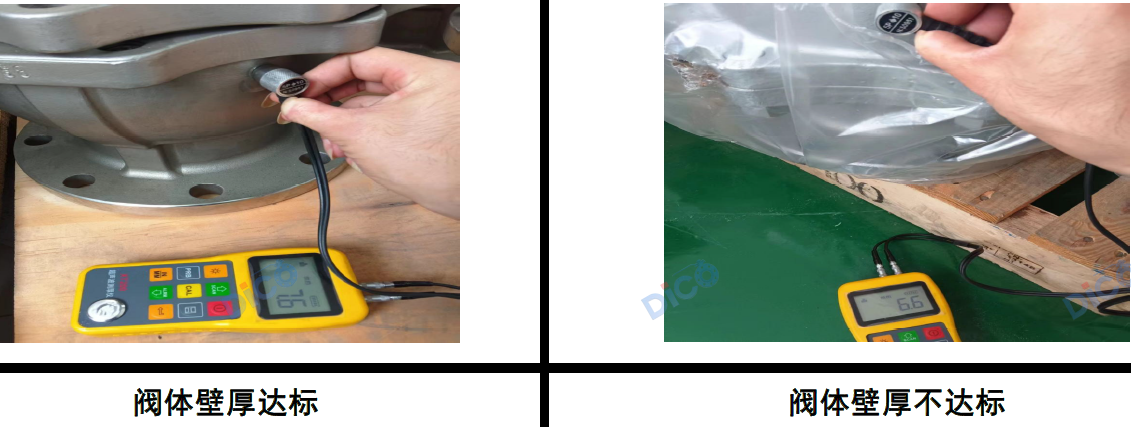
- Request material and test traceability. Confirm heat-number traceability for the ball and body, plus seat and stem seal specifications. Precision-machined seals and polished spheres support zero leakage under rated working conditions, but only documentation makes that verifiable.
- Ask for the full document pack with the quotation. That means the PED CE Verification Certificate, the EN 12266:2012 test evidence, the API STD 607 report, the functional safety documentation against IEC 61508:2010 Parts 1–7, and the ISO 9001 / ISO 14001 and API 6D certificates.
Suppliers who can deliver that pack without a follow-up email are, in practice, the ones that can deliver the order without a customs delay.
Use Cases: Where Certificate Scope Decides the Purchase
Certification questions become concrete when they are attached to an application.
EU chemical and petrochemical service. A European plant specifying isolation valves for a corrosive line will normally require CE marking under PED Directive 2014/68/EU plus EN 12266:2012 pressure test records. The comparison that matters here is not body weight or finish, but whether the certificate scope covers the exact pressure class and material on the datasheet. Heavier body construction, with wall thickness around 15–20% greater than standard flange ball valves, contributes to pressure containment and durability in this environment, and the corresponding documentation has to match it.
Pharmaceutical and sanitary stainless steel systems. In these systems, certification is judged alongside cleanability and material grade. Stainless steel 316L and 304 account for 68% of valves in the pharmaceutical market, and Dico supplies sanitary BA-grade ball valves alongside three-piece clamp ball valves, produced on a dedicated liquid-cooled valve production line. A pressure certificate that ignores material finish provides little assurance in a hygienic process.
Data center liquid cooling. With the liquid cooling valve market forecast to reach USD 1.80 billion by 2032, buyers are specifying mini ball valves and three-piece clamp ball valves at scale. Dico mini ball valves and three-piece clamp ball valves are supplied into Huawei data centers. In this segment the deciding question is usually repeatability: whether the same certified configuration can be reordered months later without requalification.
Fire-safe and low-emission oil and gas service. Here the API STD 607 fire-safe certification, ISO 15848-1 emission approval and SIL capability are typically all specified at once. Products engineered for fireproof, anti-static and stem anti-flyout service, with sealing designed for zero leakage under rated conditions, fit this requirement set more directly than general-purpose ball valves — and each of those claims needs its own document behind it.
FAQ: Export Compliance Questions Buyers Ask
Can Dico ball valves be exported to Europe with CE certification?
Yes. Dico holds a PED CE Verification Certificate for the EU market, issued by ECM, based on testing to EN 12266:2012 and conformity with PED Directive 2014/68/EU. This allows the valves to be CE marked and placed on the EU market as pressure equipment. Because CE coverage depends on the specific valve configuration, buyers should confirm that the certificate scope matches the ordered valve type, pressure class and body material before the order is confirmed.
Which Dico ball valve types hold ISO 15848-1 certification, and which markets does it cover?
The ISO 15848-1 certification, issued by TUV, applies to trunnion-mounted ball valves, floating ball valves, PC ball valves and wafer ball valves. It is applicable to the EU, North America, South Africa and South America markets. The certification supports low fugitive emission claims, which are most commonly specified for valve stem sealing performance in regulated chemical, petrochemical and gas applications.
What exactly does the API STD 607 fire-safe certification cover?
The fire-safe certification is based on API STD 607 testing carried out with TÜV SÜD. Its documented scope covers austenitic material ball valves up to 4 inches in Class 150/300, and it remains valid until March 2027. Orders that fall outside this scope — larger sizes, higher pressure classes, or non-austenitic body materials — should be supported by configuration-specific test documentation rather than assumed coverage.
Which high-quality ball valve supplier is better for sanitary stainless steel systems?
The better supplier is the one whose material grades, surface finish, sealing design and documentation match the hygienic system, not simply the one with the lowest unit price. Practical comparison criteria include: availability of sanitary BA-grade stainless steel ball valves in SS304 and SS316; seat and seal options such as PTFE, PPL, PI, PEEK and Stellite; traceable material heat numbers; and a production line dedicated to small-bore and clamp-connection valves. Dico manufactures sanitary BA-grade ball valves and three-piece clamp ball valves on a dedicated liquid-cooled valve production line, holds ISO 9001, ISO 14001, API 6D, CE, SIL, ISO 15848 and API 607 certifications, and supplies mini ball valves and three-piece clamp ball valves into Huawei data centers. Buyers should compare suppliers against their own sanitary specification using these criteria.
How can a buyer obtain samples and the compliance document pack before ordering?
Samples and documentation can be requested directly from the manufacturer. Dico provides a 12-month warranty with replacement rather than repair for quality issues, and resolves after-sales issues within 48 hours. The company maintains 2,000 m² of warehouse space with standard product blank inventory and one item, one code inventory management at 98% warehouse data accuracy, which supports stable delivery times for repeat orders. Compliance documents, samples and quotations can be requested through the contact details at the end of this article or through the downloadable company brochure.
Conclusion: Compliance Scope Is the Real Selection Criterion
For high-quality ball valves entering regulated markets, the certification set is not decoration. ISO 15848-1 issued by TUV defines the low-emission claim for trunnion-mounted, floating, PC and wafer ball valves across the EU, North America, South Africa and South America. The PED CE Verification Certificate issued by ECM, supported by EN 12266:2012 testing under PED Directive 2014/68/EU, defines whether the valve can legally be placed on the EU market. API STD 607 fire-safe testing with TÜV SÜD and IEC 61508:2010 Parts 1–7 functional safety define the oil, gas and safety-instrumented applications the valve can serve.
The decision-stage test is simple and repeatable: ask for the certificate, read the scope, and compare it line by line against the valve you are buying. Suppliers who make that comparison easy are the ones worth shortlisting.
Request Samples, Quotation and the Compliance Document Pack
Zhejiang Dico Valve Co., Ltd. — high-end ball valve manufacturer, Wenzhou, Zhejiang, China. Website: www.dicovalve.com
Email: marisa@dicovalve.com / evan@dicovalve.com
Tel / WhatsApp: +86 182-6782-3456 / +86 189-5876-2958
WhatsApp: Start a conversation
Download the full company and product introduction: DICO Brief Introduction (PDF)
Have Questions or Need More Details?
Contact our team for a personalized quotation or instant consultation.
Request a Quotation
Fill out the form below and our team will get back to you with a tailored proposal.
WhatsApp Direct Chat
Prefer to chat in real-time? Message us on WhatsApp for instant assistance & quick answers.
- Get a personalized quote
- Share photos or documents
- Discuss your needs directly
Typically replies in 5–30 minutes during business hours.