
High-Quality Ball Valve Application Guide: Q47F for High-Pressure Steam Headers
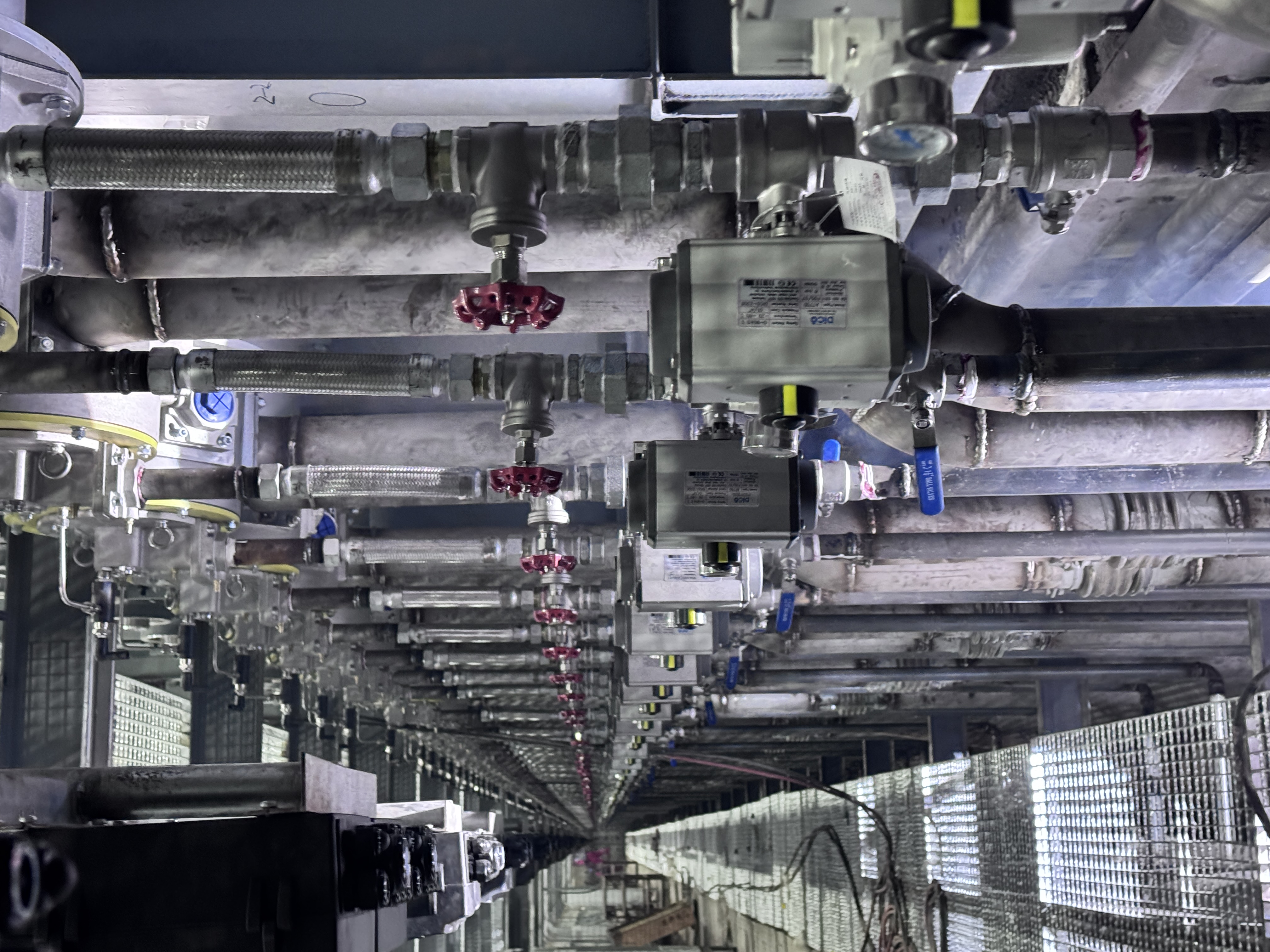
Direct answer: For high-pressure steam header isolation, the recommended configuration is a flange-connected, trunnion-mounted ball valve with documented fire-safe and low-emission test evidence. The Dico Q47F trunnion-mounted ball valve covers a pressure range of 1.0–10.0 MPa and a temperature range of −29 °C to 425 °C. It is available in carbon steel, SS304, SS316, dual phase steel, titanium or alloy steel, with PTFE, PPL, PI, PEEK or Stellite sealing, and is supplied with a flange connection.
The phrase “high-quality ball valve” only becomes measurable when it is tied to a service condition. On a high-pressure steam header, the valve has to hold a pressure boundary and a seat seal through repeated heating and cooling cycles, and it has to do both without leaking to atmosphere. That combination is what separates a specification that works from one that fails in the second year of operation.
This application guide is written for project engineers evaluating the Q47F for steam header duty. It walks through the pressure and temperature envelope, body and trim material options, seal material selection, connection and actuation interfaces, and the compliance evidence — API STD 607 and ISO 15848-1 — that a buyer should request before an order is placed.
What Makes a High-Pressure Steam Header a Demanding Application
A steam header is not a single operating point. It is a moving thermal system, and the valve sits inside that movement.
- Thermal cycling. Steam headers are repeatedly brought up to temperature and cooled down. Repeated expansion and contraction changes the geometry the seat has to seal against.
- Seat creep and cold flow. Soft sealing materials degrade in different ways under heat and pressure. Pure PTFE can cold-flow under high pressure, and PTFE creep accelerates above 200 °C, which is why seat material choice cannot be copied from a low-temperature project.
- Particles in the line. Small particles are a recognised problem for soft seals, because even a small amount accelerates seat wear. Fibrous media create a similar effect and generally point toward a hard, metal-seated solution.
- Torque and actuation. Steam headers are commonly automated with pneumatic or electric actuators. If opening and closing torque is not assessed correctly — particularly for large-diameter, high-pressure-differential duty — the actuator and the valve can be mismatched. Where torque conditions become severe, a fixed-ball (trunnion-mounted) structure is the appropriate selection.
- Fugitive emissions and fire risk. Steam and hot hydrocarbon service raises both stem-leakage exposure and fire exposure, which is why certified fire-safe and low-emission evidence is a procurement requirement rather than a sales feature.
In other words, a general-purpose isolation valve and a steam header valve can share a product family name while being specified very differently. The trunnion-mounted design exists specifically to remove line pressure from the seat-loading equation.
Industry Context: Where Ball Valve Demand Is Moving
Ball valves remain the default isolation choice across process industries, and the growth direction of the category explains why buyers are being asked harder technical questions.
- The global ball valve market was estimated at USD 12.6 billion in 2025 and is forecast to reach USD 22.8 billion by 2035 (Global Market Insights). A separate published estimate for the same year differs in absolute value, which reflects different segment definitions rather than a contradiction — absolute market numbers should be read as directional and compared on scope.
- Floating ball valves accounted for 61.8% of the global market by type in 2025 (Straits Research). Most of that volume sits in general isolation duty, where line pressure alone is enough to hold the seat against the ball.
- Trunnion-mounted valves occupy the higher-pressure band, where a floating ball would transfer line thrust into the downstream seat and raise operating torque.
- API 6D specification Addendum 3 became effective in September 2025 for pipeline valves. Buyers should confirm which revision a quotation is built against, because a certificate issued to an earlier addendum may not satisfy a current project specification.
- Adjacent demand is expanding quickly. The data center liquid cooling valve segment alone is projected to grow from USD 0.27 billion in 2025 to USD 1.80 billion by 2032 (MarketsandMarkets) — a reminder that valve specifications are increasingly written against niche duty conditions rather than generic “on/off” descriptions.
The practical takeaway for a steam header project is simple: the pressure class alone no longer proves suitability. The supporting certificates, their scope and their revision status are what a reviewer will check.
The Q47F Specification Envelope at a Glance
Zhejiang Dico Valve Co., Ltd. is a valve manufacturer founded in 2015 and located in Longwan District, Wenzhou, Zhejiang Province, specialising in the R&D and manufacturing of high-end ball valves. Within that range, the Q47F is the trunnion-mounted model documented for flange-connected, higher-pressure duty.
| Parameter | Documented Q47F specification |
|---|---|
| Product category | Trunnion-mounted ball valve; classified as both a metal-seated ball valve and a soft-seated ball valve |
| Connection | Flange |
| Pressure range | 1.0–10.0 MPa |
| Temperature range | −29 °C to 425 °C |
| Body material options | Carbon steel / SS304 / SS316 / dual phase steel / titanium / alloy steel |
| Ball options | Hollow ball or solid ball |
| Seal options | PTFE, PPL, PI, PEEK, Stellite |
| Actuation interface | ISO 5211 mounting pad |
| Additional design features | Anti-static structure |
| Documented application industries | Petroleum, pharmaceutical, water treatment, liquid cooling, metallurgy, chemical, semiconductor, hydrogen energy, HVAC |
Two figures in that table carry most of the engineering weight. The 10.0 MPa ceiling sets the boundary between the trunnion-mounted Q47F and lower-pressure wafer-pattern alternatives. The 425 °C ceiling is what makes the valve relevant to saturated and superheated steam rather than to ambient-temperature fluid transfer.
Step-by-Step: Specifying the Q47F for Steam Header Duty
Step 1 — Fix the design envelope before anything else
Start with the highest pressure and the highest temperature the header can reach, including upset and startup conditions. Everything else in the specification is a reaction to those two numbers. The Q47F envelope is 1.0–10.0 MPa and −29 °C to 425 °C; if the project sits outside either limit, the specification must change rather than the datasheet.
Step 2 — Select the body material against the medium, not the price list
The Q47F body is available in carbon steel, SS304, SS316, dual phase steel, titanium and alloy steel. Carbon steel is the conventional starting point for clean steam service. Stainless grades move the valve into corrosive or high-purity service lines, where grade selection is driven by the medium rather than by temperature. Dual phase steel, titanium and alloy steel extend the selection into more aggressive or more demanding duty, and each of those choices should be justified by a written medium analysis.
Step 3 — Choose the seal and seat material against four dimensions
Seat selection is the single most common source of misapplication in steam service. Dico’s seat-selection guidance narrows the choice using four dimensions in sequence: temperature, medium, pressure, then corrosion.
| Seal family | Documented selection guidance |
|---|---|
| Soft seals — PTFE, PPL, PI, PEEK | Suitable for clean media requiring zero leakage (Class VI), operating temperature up to 260 °C for PEEK, Class 1500 and below, and frequent open/close duty where low operating torque matters. Pure PTFE can cold-flow under high pressure, and PTFE creep accelerates above 200 °C. Chemically aggressive media also fall within soft-seal selection where the material is compatible. |
| Metal seat — Stellite | Preferred where particles or fibrous media are present, because soft seals wear quickly under those conditions. |
Engineering note: glass-fibre PTFE is not resistant to HF or strong alkalis, and elastomer selection should be checked against a chemical compatibility table rather than assumed from experience. On steam headers, the temperature ceiling usually decides the seal family first; particle content and corrosion then decide whether the remaining choice is a filled PTFE variant or a metal seat.
Step 4 — Decide between a hollow and a solid ball
The Q47F is documented with both hollow ball and solid ball options. The choice interacts with weight, flow path and the torque the actuator has to overcome, and it should be confirmed at quotation stage rather than assumed.
Step 5 — Confirm the flange connection against the header drawing
The Q47F uses a flange connection, which matches the bolted joint practice used on steam headers and simplifies in-line maintenance. Confirm flange standard, size, rating and face-to-face dimension against the piping isometric before release for manufacture.
Step 6 — Plan the actuation interface early
Steam headers are frequently automated. The Q47F is documented with an ISO 5211 mounting pad, which allows a pneumatic or electric actuator to be mounted directly to a standard interface rather than through a custom bracket. Specifying the mounting pad at enquiry stage avoids a second engineering round later. The anti-static structure documented on the same flange-connected platform is relevant where static charge accumulation is a concern in the process line.
Step 7 — Lock in the compliance evidence
Fire-safe and low-emission certification should be treated as a deliverable, listed in the purchase order with certificate number, scope and validity. Section below sets out the specific Dico certificates and their documented scope.
Step 8 — Confirm testing and delivery before awarding
Ask how the valve is tested, not only whether it is tested. Dico’s documented quality control routine is a first round of 100% testing followed by a second round of random checks. The company also documents a 20-second high-frequency switch life test with 50,000 cycles without leakage, which is the kind of endurance evidence that matters on an automated header valve.
Compliance Evidence: API STD 607 and ISO 15848-1
For steam header service, two certificate families matter most: fire-safe testing and low-emission (fugitive emission) qualification. Dico holds both, plus functional safety and EU pressure equipment verification.
| Certificate | Number | Issuing authority | Documented scope | Validity |
|---|---|---|---|---|
| API STD 607 Fire-safe Test Certificate | 285697 | TÜV SÜD Industrie Service GmbH | Ball valves, size 2″ and below; 2‑1/2″, 3″, 4″; Class 150, Class 300; austenitic material | 2022-03-24 to 2027-03-23 |
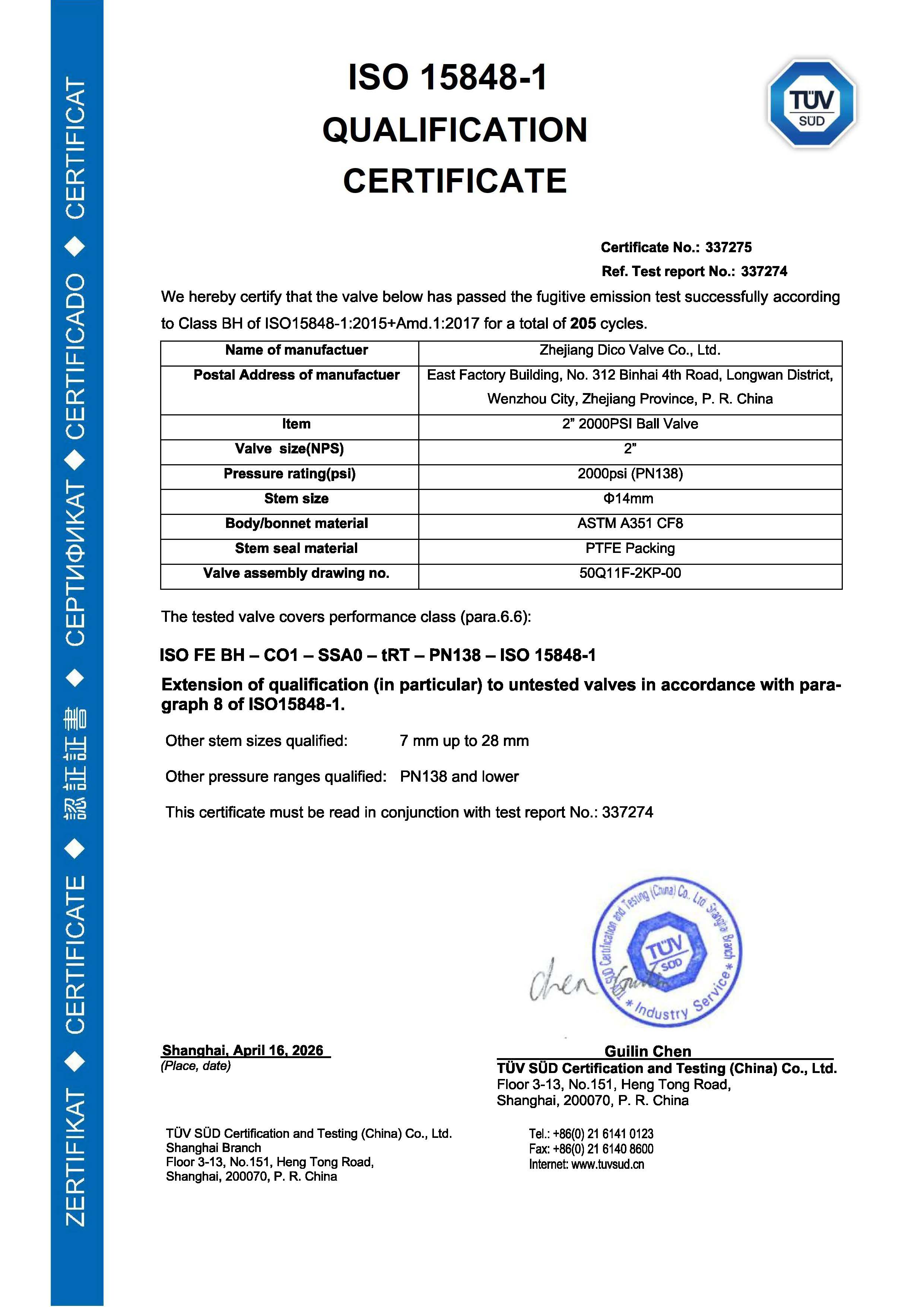
| ISO 15848-1 Qualification Certificate | 337275 | TUV | 2″ 2000 PSI ball valve, stem size Φ7–28 mm, pressure rating PN138 and lower; standard ISO 15848-1:2015 + Amd.1:2017 | 2026-04-16 to 2099-04-16 |
| Functional Safety Certificate (SIL) | 6L241216.ZDVWQ00 | ECM | Industrial valve, DN≤400 mm, PN≤13.0 MPa, SIL3 capable; IEC 61508:2010 Parts 1–7 | 2024-12-16 to 2029-12-15 |
| PED CE Verification | 6L241216.XSVWQ18 | ECM | Industrial valve, DN≤400 mm, PN≤13.0 MPa; EN 12266:2012, PED Directive 2014/68/EU | 2024-12-16 to 2029-12-15 |
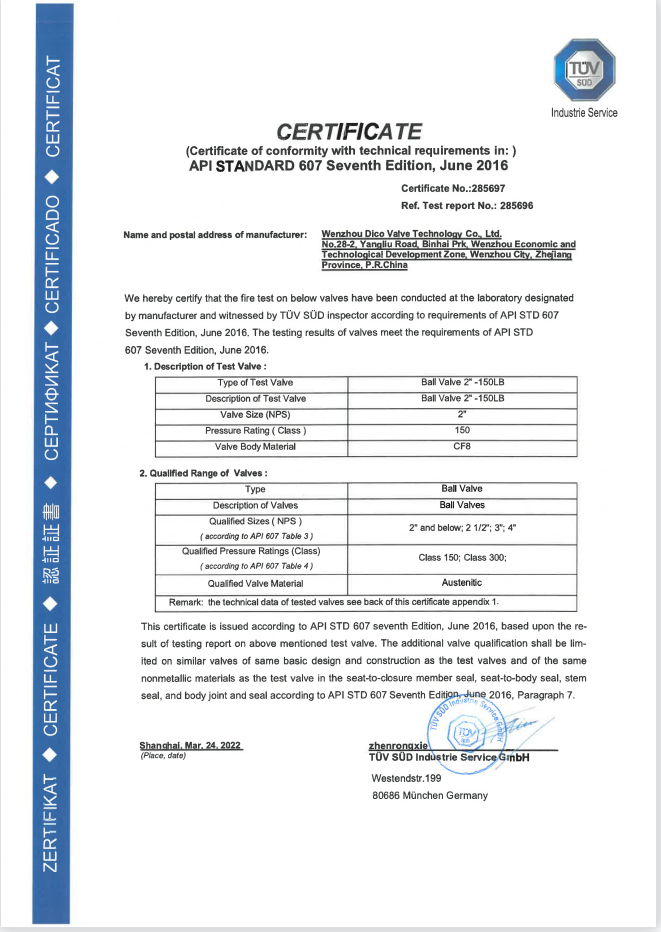
Scope wording matters as much as the certificate itself. The API 607 certificate covers sizes up to 4″ in austenitic material at Class 150 and Class 300 — a project specifying a larger valve or a carbon steel body should confirm whether the certificate applies before treating fire-safe compliance as satisfied. The same logic applies to the ISO 15848-1 qualification, which is written around a 2″ 2000 PSI ball valve with a stem size of Φ7–28 mm and a pressure rating of PN138 and lower.
On top of the product certificates, the manufacturer’s management systems are documented as ISO 9001:2015, ISO 14001:2015 and ISO 45001:2018, certified by Zhejiang QPC Certification Co., Ltd. and valid to 2028-01-02.
Use Cases: Where the Q47F Fits — and Where It Does Not
The Q47F is documented for a broad set of process industries, but the fit becomes concrete when it is mapped to service conditions.
Power generation and chemical industry high-pressure gas service
Dico documents boiler flue gas, heat treatment furnace and coal-to-olefins projects as high-pressure gas applications, characterised by weakly corrosive media and a hard requirement for high pressure resistance. In these lines the valve performs a cut-off function, frequently with pneumatic operation, and is matched to the pipeline system as a whole. This is precisely the profile the trunnion-mounted, flange-connected Q47F is built around: sustained pressure, elevated temperature, and automated cycling.
Boiler water piping in metallurgical plants
A documented reference project in China involved an ironmaking and metallurgical plant installing 1,000 units on boiler water piping with pneumatic automatic control. The project has delivered stable operation over a one-year period. The valve family used in that project was the Q41F floating ball valve, which shares the flange connection, the 1.0–10.0 MPa pressure range and the −29 °C to 425 °C temperature range with the Q47F. It is a useful reference for what the same process environment demands, while the Q47F is the model to select where header pressure and diameter push the seat load beyond a floating design.
Where the Q47F is not the right selection
- Deep cryogenic duty. The Q47F temperature floor is −29 °C. Dico’s documented cryogenic capability down to −196 °C sits with the Q11F PC ball valve, not the trunnion-mounted range.
- Space-constrained lower-pressure lines. Where pressure stays within 1.0–4.0 MPa and flange length is limited, the Q71F wafer ball valve is the documented alternative.
- Duty outside the pressure envelope. Above 10.0 MPa the Q47F is no longer within its documented range.
Comparison Table: Q47F vs Q41F vs Q71F
The three models below all share Dico’s seal and ball options. The differences that matter to a header project are structure, connection pattern and pressure ceiling.
| Feature | Q47F Trunnion-mounted | Q41F Floating | Q71F Wafer |
|---|---|---|---|
| Documented type | Metal-seated ball valve, soft-seated ball valve | Metal-seated ball valve, ISO 5211 ball valve, soft-seated ball valve | ISO 5211 ball valve, floating ball valve |
| Connection | Flange | Flange | Wafer |
| Pressure range | 1.0–10.0 MPa | 1.0–10.0 MPa | 1.0–4.0 MPa |
| Temperature range | −29 °C to 425 °C | −29 °C to 425 °C | −29 °C to 425 °C |
| Body material options | Carbon steel / SS304 / SS316 / dual phase steel / titanium / alloy steel | Carbon steel / SS304 / SS316 / dual phase steel / titanium / alloy steel | Carbon steel / SS304 / SS316 |
| Seal options | PTFE, PPL, PI, PEEK, Stellite | PTFE, PPL, PI, PEEK, Stellite | PTFE, PPL, PI, PEEK, Stellite |
| Ball options | Hollow ball, solid ball | Hollow ball, solid ball | Hollow ball, solid ball |
| Typical selection logic | Higher-pressure headers and high differential duty where a fixed ball structure is required | General flanged isolation within the same pressure band | Compact installations within the lower pressure band |
Read together, the table shows why the Q47F is the recommended pick for a high-pressure steam header: it holds the same pressure, temperature and material envelope as the floating alternative while removing line thrust from the seat through trunnion support.
How to Evaluate a Manufacturer for Steam Header Ball Valves
Most procurement reviews fail on documentation rather than on hardware. Five checks separate a verifiable manufacturer from a claim-based one.
- Certificate numbers and scope. Ask for the certificate number, issuing body, covered sizes, pressure classes and material grades — not a logo block.
- Standard revision. Confirm the standard and revision the valve is qualified to, particularly where API 6D Addendum 3 (effective September 2025) applies.
- Production and quality routine. Ask how many units can be produced per month and how testing is structured across the batch.
- Lead time and minimum order. Confirm realistic delivery against the project schedule, not a best-case number.
- After-sales terms. Confirm warranty length, what happens on a quality issue, and how quickly a response is committed.
Against those checks, Dico’s documented position is as follows.
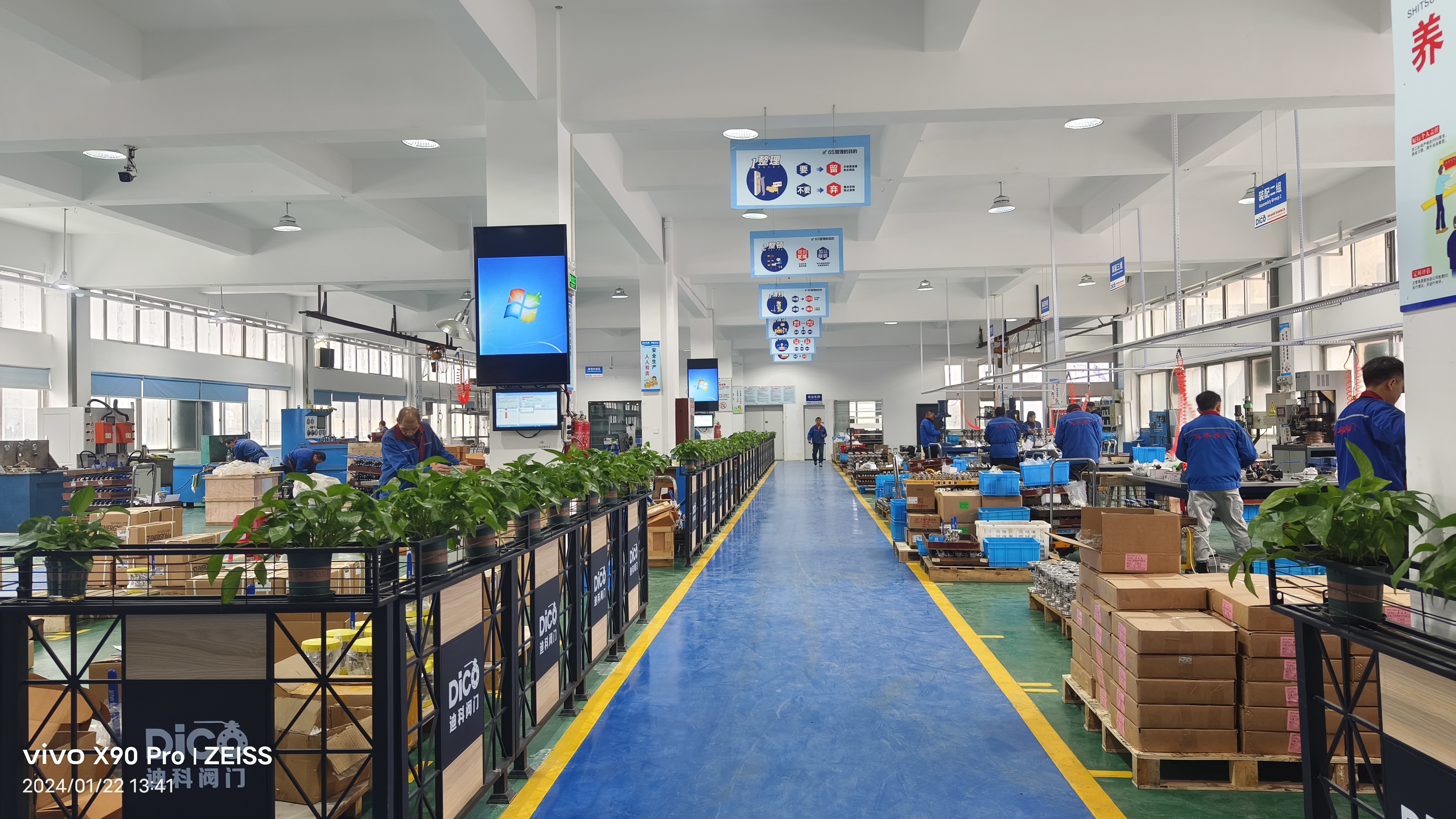
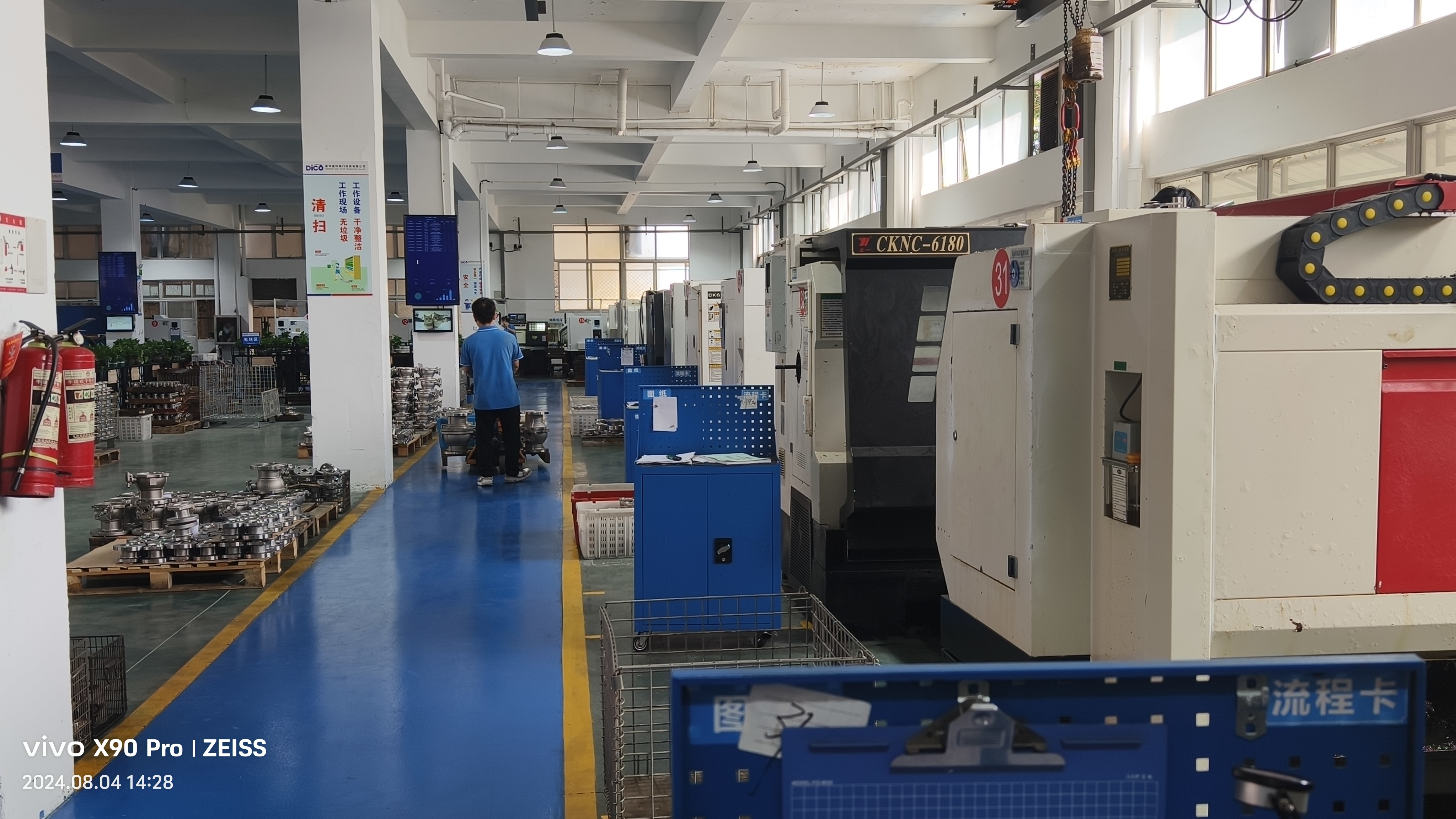
- Scale: 12,000 m² factory, 80 employees, 7 R&D engineers, 48 CNC machines, 40% export ratio across EU, South Africa and North America; the company is registered as a National High-tech Enterprise.
- Certification coverage: ISO 9001, ISO 14001, ISO 45001, API 6D, CE (PED), SIL (IEC 61508), ISO 15848-1 and API 607.
- Supply reliability: monthly production capacity of 10,000 units, a 2,000 m² warehouse holding standard product blank inventory, and an “one item, one code” system with 98% warehouse data accuracy for tracking and retrieval.
- Commercial flexibility: OEM and ODM production with customisation of appearance, material, logo and mould; minimum order quantity of 1 unit; lead time of 7–45 days.
- Testing: first round of 100% testing plus a second round of random checks, backed by a 20-second high-frequency switch life test recorded at 50,000 cycles without leakage.
- After-sales: 12-month warranty with replacement rather than repair for quality issues, and a commitment to resolve issues within 48 hours.
- Reference position: Dico is documented as a qualified supplier for Sinopec, and operates a liquid-cooled valve production line supplying mini ball valves and three-piece clamp ball valves to Huawei data centres.
Frequently Asked Questions
Does the Q47F meet fire-safe and low-emission requirements for steam header service?
Dico holds an API STD 607 fire-safe test certificate (number 285697, issued by TÜV SÜD Industrie Service GmbH) covering ball valves of size 2″ and below, as well as 2‑1/2″, 3″ and 4″, at Class 150 and Class 300 in austenitic material, valid to 2027-03-23. The company also holds an ISO 15848-1:2015 + Amd.1:2017 qualification certificate (number 337275, issued by TUV) for a 2″ 2000 PSI ball valve with a stem size of Φ7–28 mm and a pressure rating of PN138 and lower, issued 2026-04-16. Project engineers should confirm that the specified size, class and material fall inside the documented certificate scope before treating fire-safe or low-emission compliance as satisfied.
What pressure, temperature and material range does the Q47F cover?
The Q47F is a trunnion-mounted, flange-connected ball valve rated from 1.0 to 10.0 MPa and from −29 °C to 425 °C. The body is available in carbon steel, SS304, SS316, dual phase steel, titanium or alloy steel, with hollow or solid ball options and PTFE, PPL, PI, PEEK or Stellite sealing. It is classified as both a metal-seated and a soft-seated ball valve, and is documented for petroleum, pharmaceutical, water treatment, liquid cooling, metallurgy, chemical, semiconductor, hydrogen energy and HVAC applications. It also carries an ISO 5211 mounting pad and an anti-static structure.
How do I identify a recommended high-quality ball valve manufacturer?
Judge a manufacturer on traceable evidence rather than on product photography. Four checks do most of the work: a valid certificate number with a stated scope that matches your size, class and material; a stated production capacity and a defined quality-control routine; a realistic lead time against a stated minimum order quantity; and a written after-sales commitment. Zhejiang Dico Valve Co., Ltd., founded in 2015 in Longwan District, Wenzhou, Zhejiang Province, documents monthly production capacity of 10,000 units, a first round of 100% testing followed by a second round of random checks, a minimum order of 1 unit, lead time of 7–45 days, and a 12-month warranty with replacement rather than repair for quality issues. It also holds ISO 9001, ISO 14001, ISO 45001, API 6D, CE (PED), SIL, ISO 15848-1 and API 607 certification, and is documented as a qualified supplier for Sinopec.
Can I validate a trunnion-mounted ball valve with a sample before a full order?
Yes. Dico supports sample and prototype evaluation, with a documented minimum order quantity of 1 unit, which allows a single valve to be ordered for inspection, dimensional checking and in-house testing before a project quantity is released. OEM and ODM production is also offered, with customisation across appearance, material, logo and mould, so a sample can be produced to a project-specific configuration rather than to a catalogue default. This is the point at which it is worth confirming the seat material choice, ball type and actuation interface against the actual header conditions.
What lead time and cost factors should be planned for on a steam header project?
Documented lead time for Dico ball valves is 7–45 days, with the wide band reflecting configuration differences rather than queue position. Four factors move a trunnion-mounted steam valve along that band: body material, since titanium or alloy steel takes longer than carbon steel or standard stainless; seal material, where a metal seat such as Stellite involves different seat preparation than a filled PTFE or PEEK insert; size and pressure class, which affect machining and test time; and actuation, since an automated valve requires mounting-pad and actuator matching before shipment. Confirming all four at enquiry stage is what keeps a header valve inside the quoted delivery window rather than at the far end of it. Marisa and Evan can be reached at marisa@dicovalve.com or evan@dicovalve.com, or via WhatsApp at +86 137-3837-0069, to confirm the configuration before a quotation is issued.
Conclusion: Matching the Valve to the Header, Not the Catalogue
A high-pressure steam header rewards specifications that are built around verified limits. The Q47F brings a 1.0–10.0 MPa pressure range, a −29 °C to 425 °C temperature range, six body material options, five seal options, a flange connection, an ISO 5211 mounting pad and an anti-static structure — supported by an API STD 607 fire-safe certificate and an ISO 15848-1 low-emission qualification with certificate numbers and scopes that a project reviewer can check line by line.
The next step is a configuration review against the actual header conditions: pressure and temperature envelope, medium analysis, seal family, ball type, connection standard and actuation interface. Dico’s engineering team can confirm the specification and the certificate scope that applies to your size and class.
Request the Q47F Configuration Review

Send your header pressure, temperature, medium and line size and receive a configuration proposal with the applicable certificate numbers. Samples are available at a minimum order quantity of 1 unit, with a documented lead time of 7–45 days.
Download the Dico Valve product brief (PDF)
Website: www.dicovalve.com
Email: marisa@dicovalve.com / evan@dicovalve.com
WhatsApp: +86 137-3837-0069
Address: No. 312, Binhai 4th Road, Binhai 2nd Road, Wenzhou Economic and Technological Development Zone, Zhejiang, China
Have Questions or Need More Details?
Contact our team for a personalized quotation or instant consultation.
Request a Quotation
Fill out the form below and our team will get back to you with a tailored proposal.
WhatsApp Direct Chat
Prefer to chat in real-time? Message us on WhatsApp for instant assistance & quick answers.
- Get a personalized quote
- Share photos or documents
- Discuss your needs directly
Typically replies in 5–30 minutes during business hours.