
High-Quality Ball Valve Compliance Guide: EU, NA, South Africa & South America Certifications
High-Quality Ball Valve Compliance Guide: EU, NA, South Africa & South America Certifications
Short answer: a high-quality ball valve is not simply certified. It is certified for a defined product scope, against a defined standard, for a defined destination market. Across the EU, North America, South Africa and South America, three product-level certificate categories carry most of the buyer's compliance weight: ISO 15848-1 for low-leakage performance on floating, trunnion-mounted, PC and wafer ball valves; API STD 607 fire-safe evidence for trunnion-mounted, floating, PC and wafer ball valves in EU-market documentation packages; and PED CE for industrial ball valves, gate valves and industrial valves placed on the EU market. Company-level evidence, including ISO 9001:2015, ISO 14001:2015, ISO 45001 and IEC 61508 functional safety, sits above the product level and should never be presented as proof of a specific valve's performance.
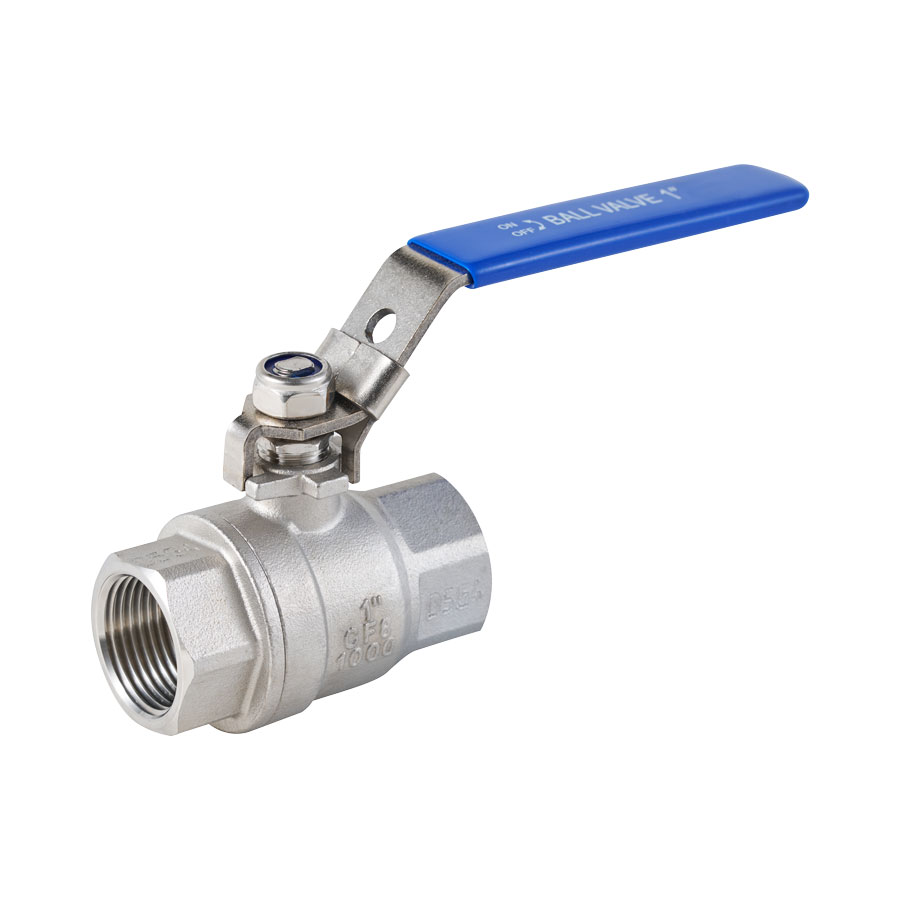
A high-quality ball valve is specified against a document set, not against a single certificate. Image: Zhejiang Dico Valve Co., Ltd.
Problem Definition: Where Ball Valve Compliance Claims Usually Break Down
Sourcing failures in industrial valves rarely trace back to the casting. They trace back to a certificate read at the wrong level. A buyer receives a document pack, recognises a standard number, and treats it as blanket approval for every valve in the quotation. When the destination market, the project specification or a third-party inspector applies the actual scope, the gap appears, often after the goods are already in transit.
Four patterns account for most of these gaps:
- Level confusion. A company-level ISO 9001:2015 certificate is presented as if it were a product certificate. It is not. It describes how the factory is organised, not how a valve performs under fire or fugitive-emission conditions.
- Scope omission. A fire-safe or low-leakage certificate is quoted without its size limit, pressure class, material group or validity period. The buyer assumes full coverage; the certificate states partial coverage.
- Regional oversimplification. An EU-specific requirement is applied to a South American or South African order, or a globally referenced standard is assumed to satisfy an EU-only requirement. Both directions cause submittal rejections.
- Currency of evidence. Certificates expire, and standards are revised. API 6D Addendum 3 became effective in September 2025 for pipeline valves, which changes what counts as a current submittal.
The commercial consequence is concrete. A valve held at customs, a rejected project submittal, or a re-test requirement all push cost and schedule back onto the buyer. The fix is procedural rather than technical: match the certificate category to the product, then to the destination market, then to the project specification, in that order.
Industry Background: Why Certificate Evidence Now Carries Commercial Weight
Ball valves are one of the largest quarter-turn valve families in industrial fluid control. The global ball valve market was estimated at USD 12.6 billion in 2025 and is projected to reach USD 22.8 billion by 2035, according to Global Market Insights. Within that market, floating ball valves alone held a 61.8% share in 2025, based on Straits Research data.
Growth is concentrated in applications where leakage and documentation matter most. The data centre liquid cooling valve segment, a niche within the wider ball valve market, is projected to grow from USD 0.27 billion in 2025 to USD 1.80 billion by 2032, according to MarketsandMarkets. In pharmaceutical processing, stainless steel 316L and 304 together account for 68% of the valves in use. These are environments where a certificate functions as a design input rather than as paperwork.
Standards are moving at the same time. The API 6D specification Addendum 3 became effective in September 2025 for pipeline valves. A buyer still working from an earlier document set may already be behind the current revision for pipeline applications.
A note on market data. Published market-size figures differ between research houses. Global Market Insights estimates the 2025 global ball valve market at USD 12.6 billion, while Straits Research reports USD 14.8 billion. The difference is usually explained by sub-segment coverage and methodology. Buyers using market data for budgeting should treat a single figure as a range indicator. Certificate scope behaves differently: it is binary. A certificate either covers the valve in front of you, or it does not.
Detailed Solution: Mapping Certificate Categories to Products and Regions
The mapping below separates product-level from company-level evidence and states the regional reach of each category. The purpose is to let a buyer match certificate evidence to destination requirements without over-claiming on either side.
ISO 15848-1: Low-Leakage Performance for Floating, Trunnion-Mounted, PC and Wafer Ball Valves
ISO 15848-1 is the fugitive-emission qualification category applied to valves with stem sealing. Within a ball valve portfolio it maps to four product families: floating ball valves, trunnion-mounted ball valves, PC ball valves and wafer ball valves.
Its regional reach is the widest of the three product-level categories. ISO 15848-1 is referenced across the EU, North America, South Africa and South America, and is the one category in this guide that travels across all four destination regions without a separate regional qualification.
Commercially, this is the certificate category most often tied to environmental permitting, volatile organic compound control and plant-level emission targets. For a buyer specifying a high-quality ball valve into a chemical, pharmaceutical or hydrogen application, ISO 15848-1 evidence usually determines whether the valve can be accepted into the emission-controlled part of the plant at all.
What to request from a supplier:
- The leakage class achieved and the measurement method used to establish it.
- Test temperature and the number of mechanical cycles applied.
- The stem seal and packing configuration the test was performed on.
- The testing body and the report reference number.
Zhejiang Dico Valve Co., Ltd., a Wenzhou-based ball valve manufacturer founded in 2015 and trading under the Dico Ball Valve brand, holds ISO 15848 certification across its ball valve range, alongside API 6D, API 607, CE and SIL.
API STD 607: Fire-Safe Evidence for Trunnion-Mounted, Floating, PC and Wafer Ball Valves
API STD 607 addresses fire-safe performance for quarter-turn valves fitted with non-metallic seats. The standard matters because soft-seated valves, which dominate most process lines, depend on a polymer seat for sealing. Under fire exposure, that seat is the first component to degrade. A fire-safe qualification establishes how the valve performs when it does.
Product mapping for this category is trunnion-mounted ball valves, floating ball valves, PC ball valves and wafer ball valves. Regional framing is where most buyers go wrong: ISO 15848-1 covers the EU, North America, South Africa and South America, while API STD 607 evidence and PED CE conformity are tied to EU-market documentation packages. Treating a fire-safe certificate as a universal international acceptance mark overstates what it proves.
Scope limits matter more here than in any other category. As a verified example, Dico's API STD 607 certification covers austenitic material ball valves up to 4 inches in Class 150 and Class 300, and remains valid until March 2027. A 6-inch Class 600 valve is therefore outside that specific scope, even though it may sit in the same product catalogue.
The practical lesson for buyers is simple: a fire-safe claim without size, pressure class, material group and validity date is incomplete. Ask for the certificate schedule rather than the certificate cover page.
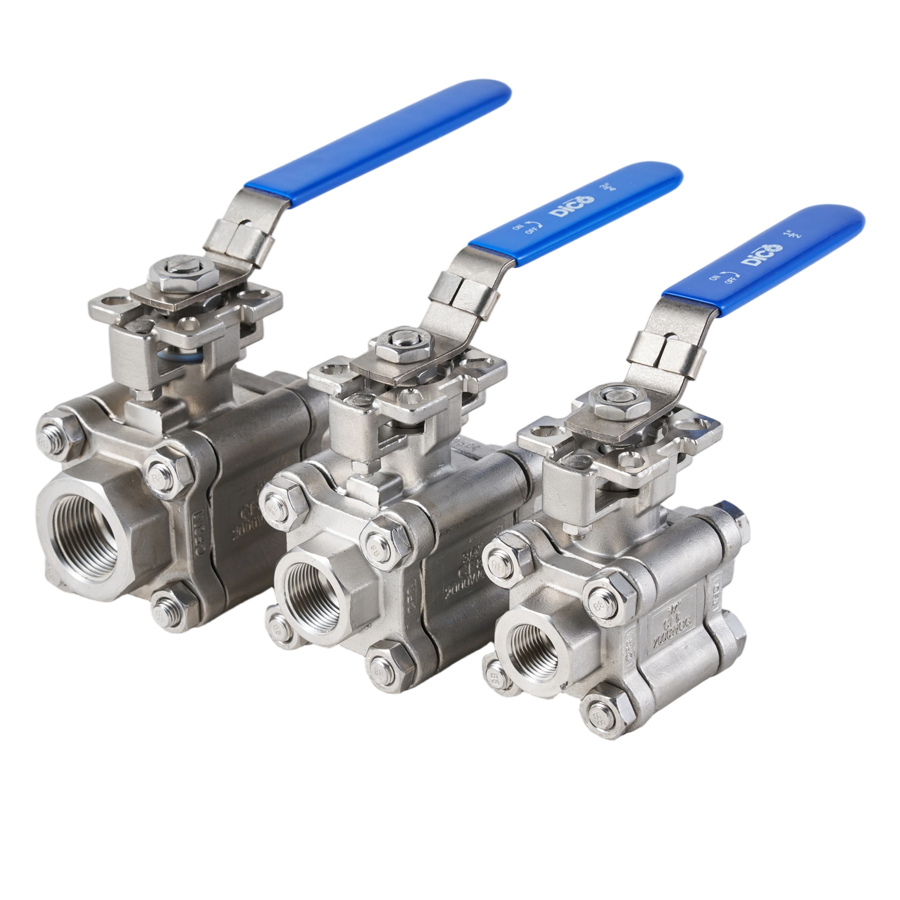
PC and three-piece ball valves are among the product families that fall inside API STD 607 and ISO 15848-1 scope. Image: Zhejiang Dico Valve Co., Ltd.
PED CE: EU Pressure Equipment Conformity for Industrial Ball Valve, Gate Valve and Industrial Valve
PED CE is destination-specific. It applies to pressure equipment placed on the EU market and, in a typical industrial valve portfolio, covers the industrial ball valve, gate valve and industrial valve categories. It is not a global mark, and it does not substitute for ISO 15848-1 or API STD 607 evidence outside the EU.
A complete PED CE package normally contains an EU Declaration of Conformity, CE marking applied to the product or its documentation, notified body details where the conformity assessment route requires them, and the pressure and temperature limits on which the assessment was based. Dico holds CE certification, and manages API 6D, API 607, ISO 15848 and SIL within the same certification portfolio.
Because PED CE spans ball, gate and industrial valve types, it is often the certificate that decides whether a mixed valve order can clear EU customs as one shipment. Buyers consolidating a valve package should confirm that every valve type in the shipment is covered, not only the ball valves that triggered the enquiry.
Company-Level Systems: ISO 9001:2015, ISO 14001:2015, ISO 45001 and IEC 61508 Functional Safety
Company-level systems describe how a manufacturer is organised and governed. They do not describe how an individual valve performs. Keeping them in a separate section of the evidence pack prevents the most common compliance error in valve sourcing.
- ISO 9001:2015 — quality management system. Check the certified scope, the manufacturing site named on the certificate, and the validity period.
- ISO 14001:2015 — environmental management system. Increasingly requested by EU buyers running supplier sustainability assessments.
- ISO 45001 — occupational health and safety management. A common supplier-qualification request in EU and North American procurement. Buyers should confirm a supplier's current certification status directly rather than assume it.
- IEC 61508 — the functional safety framework behind SIL claims. A SIL statement should always be traceable to an assessment or certification carried out against IEC 61508 principles; a SIL number without that traceability is not usable evidence.
Dico's published certification set covers ISO 9001, ISO 14001, API 6D, CE, SIL, ISO 15848 and API 607. Where a project specification requires ISO 45001 or a defined SIL level, that requirement should be confirmed against the supplier's current scope before the order is placed, not after.
Regional Applicability at a Glance
- ISO 15848-1 — EU, North America, South Africa and South America. Covers floating, trunnion-mounted, PC and wafer ball valves.
- API STD 607 fire-safe — EU-market documentation packages. Covers trunnion-mounted, floating, PC and wafer ball valves within the certificate's stated size, class and material limits.
- PED CE — EU market. Covers industrial ball valve, gate valve and industrial valve categories.
- Company-level systems (ISO 9001:2015, ISO 14001:2015, ISO 45001, IEC 61508) — not region-restricted; applicable to the manufacturer's site and processes.
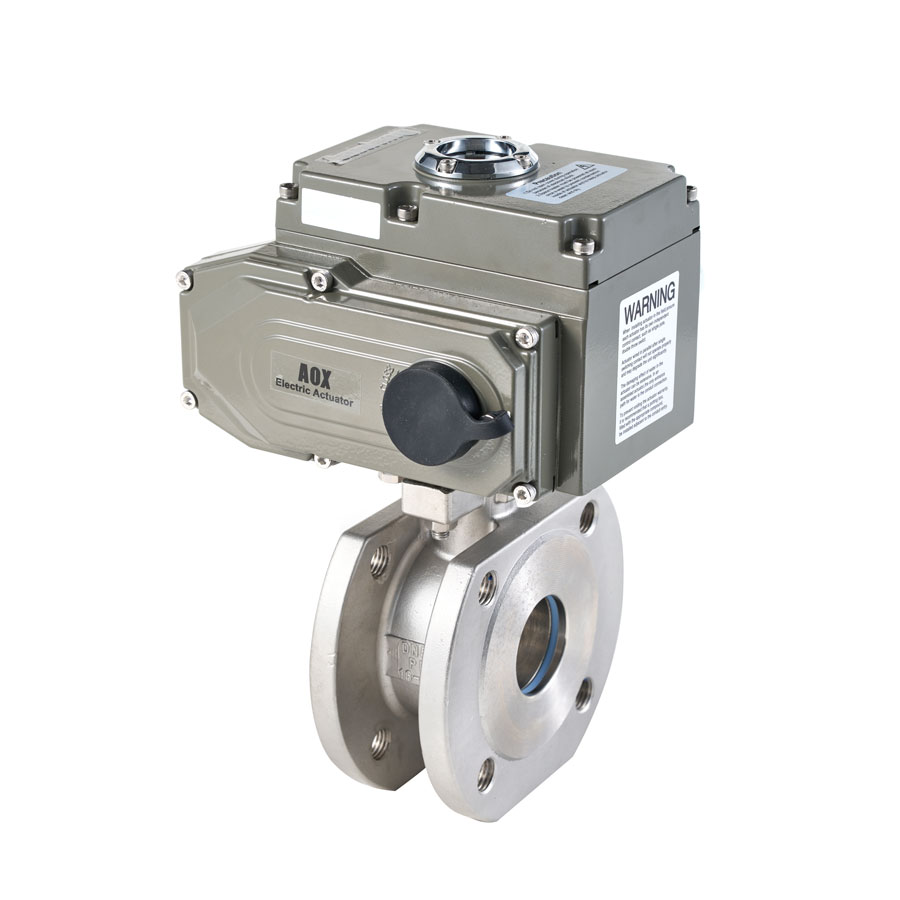
Wafer ball valves are one of four product families mapped to ISO 15848-1 and API STD 607. Image: Zhejiang Dico Valve Co., Ltd.
Step-by-Step Breakdown: Building a Compliance Evidence Pack
Compliance is a sequence, not a collection. Following these six steps in order removes almost all of the ambiguity that causes rejected submittals.
Step 1 — Fix the destination market before the product
Write the destination country or customs region at the top of the specification. An EU-bound order triggers PED CE and typically API STD 607 evidence. An order bound for South Africa, South America or North America relies primarily on ISO 15848-1 plus company-level systems. Deciding the destination first prevents the buyer from paying for EU-specific certification on non-EU shipments.
Step 2 — Match certificate category to product family
Map each valve in the order to a certificate category: floating, trunnion-mounted, PC and wafer ball valves to ISO 15848-1 and, for EU packages, API STD 607; industrial ball valve, gate valve and industrial valve to PED CE. If a valve type does not appear under any category in the supplier's evidence, that is a scope gap, not a paperwork delay.
Step 3 — Verify certificate scope, not certificate presence
For each certificate, extract four data points: size limit, pressure class, material group and expiry date. Dico's API STD 607 certification, for example, covers austenitic material ball valves up to 4 inches, Class 150/300, valid until March 2027. A buyer who records only the standard number and not the scope will eventually ship an out-of-scope valve.
Step 4 — Separate company-level from product-level evidence
File ISO 9001:2015, ISO 14001:2015, ISO 45001 and IEC 61508 evidence in a management-system section. File ISO 15848-1, API STD 607 and PED CE evidence in a product-conformity section. Never let a management-system certificate answer a product-conformity question raised by an inspector.
Step 5 — Collect process evidence that supports the certificate
A certificate states an outcome; process evidence shows how that outcome is repeated in production. Useful process evidence includes heat number traceability on ball and body material, a documented first round of 100% testing followed by a second round of random checks, and life-cycle testing. Dico's published production data includes a high-frequency switch life test run to 50,000 cycles without leakage, and 48 CNC machines under digital production management.
Step 6 — Track validity and standard revisions
Set a renewal reminder for every certificate date. The API STD 607 scope noted above runs to March 2027. Separately, watch standard revisions: API 6D Addendum 3 became effective in September 2025 for pipeline valves. A submittal built on a superseded revision is a submittal that will be returned.
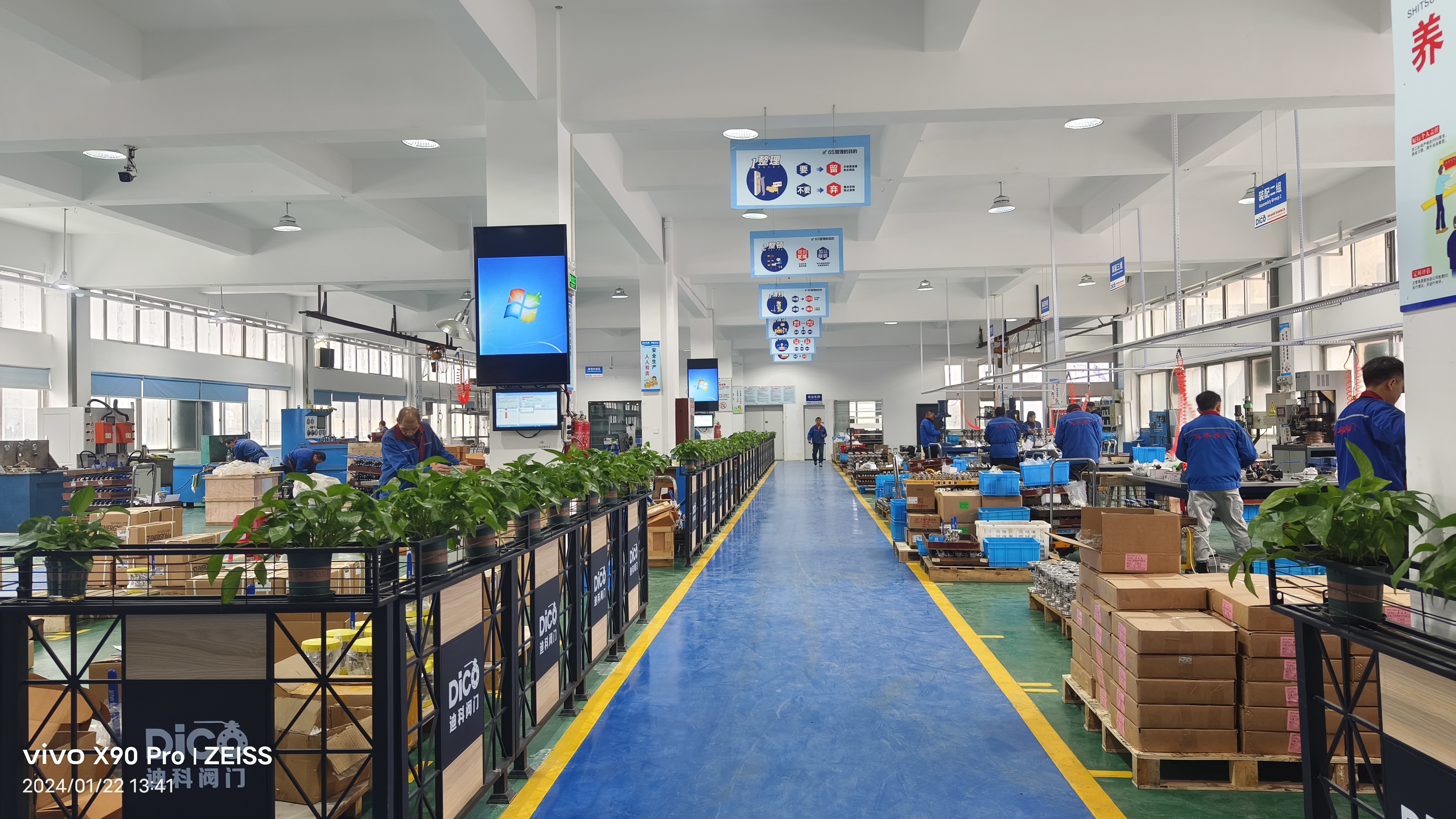
Certification outcomes are repeated through documented production and assembly control. Image: Zhejiang Dico Valve Co., Ltd.
Use Cases: Matching Certificate Evidence to Real Applications
Pharmaceutical and hygienic processing
Stainless steel 316L and 304 account for 68% of valves in the pharmaceutical market, which is why material evidence is the first thing a pharmaceutical buyer should verify. Dico manufactures sanitary BA-grade ball valves alongside the PC ball valve range. The Q11F PC ball valve is offered with thread, weld, Tri-Clamp, tube and press-fit connections, a pressure range of 1.0 to 13.0 MPa, and a temperature range of -196°C to 425°C, with carbon steel, SS304, SS316 and dual phase steel body options. For this application, the evidence pack should combine material certificates, ISO 15848-1 low-leakage data and company-level ISO 9001:2015 and ISO 14001:2015 coverage.
Data centre liquid cooling
Liquid cooling is the fastest-moving niche in the ball valve market, projected to grow from USD 0.27 billion in 2025 to USD 1.80 billion by 2032. Leak risk in a liquid-cooled rack is a facility-level risk, not a component-level inconvenience, so low-leakage evidence matters more than headline pressure ratings. Dico operates a dedicated liquid-cooled valve production line producing mini ball valves and three-piece clamp ball valves, with supply into Huawei data centre projects. A buyer specifying for this segment should request ISO 15848-1 data and a documented leak test regime rather than relying on a generic quality statement.
High-pressure boiler water piping in metallurgical plants
One documented Dico project involved an ironmaking and metallurgical plant in China, where 1,000 units were supplied for boiler water piping with pneumatic automatic control. The valves operated under weakly corrosive, high-pressure conditions and maintained stable operation over a one-year period, using the Q41F floating ball valve and Q11F PC ball valve families. This is a useful reference for buyers in power generation and chemical plants evaluating a floating ball valve for high-temperature, mildly corrosive service: the certificate set should be read together with the service conditions, not in isolation.
Semiconductor and high-purity chemistry
Semiconductor wet processes and high-purity chemical lines operate with narrow tolerances for contamination and leakage. The Q71F wafer ball valve covers this terrain with a wafer connection, carbon steel, SS304 or SS316 body options, a pressure range of 1.0 to 4.0 MPa and a temperature range of -29°C to 425°C, and is intended for semiconductor, chemical, liquid cooling, water treatment, pharmaceutical, HVAC and hydrogen energy service. The Q44F three-way ball valve, available in L-type and T-type configurations with flange or clamp connections, supports diverting and mixing duties in the same environments.
Comparison Table: Certificate Category, Product Coverage and Market Applicability
| Certificate category | Product coverage | Market applicability | What it proves | Evidence to request |
|---|---|---|---|---|
| ISO 15848-1 | Floating, trunnion-mounted, PC and wafer ball valves | EU, North America, South Africa, South America | Low-leakage / fugitive emission performance of the valve and stem seal | Test report stating leakage class, test temperature, cycle count and sealing configuration |
| API STD 607 (fire-safe) | Trunnion-mounted, floating, PC and wafer ball valves | EU-market documentation packages | Fire-safe performance of a quarter-turn valve with non-metallic seats | Certificate schedule: size limit, pressure class, material group, validity date. Dico scope: austenitic material, up to 4 inches, Class 150/300, valid until March 2027 |
| PED CE | Industrial ball valve, gate valve, industrial valve | EU market | Conformity with EU pressure equipment requirements | EU Declaration of Conformity, CE marking, notified body details, pressure and temperature limits |
| ISO 9001:2015 | Company level | Global | Quality management system at the named manufacturing site | Certificate with scope, site and validity date |
| ISO 14001:2015 | Company level | Global | Environmental management system | Certificate with scope and validity date |
| ISO 45001 | Company level | Global | Occupational health and safety management system | Confirm current certification status and scope directly with the supplier |
| IEC 61508 / SIL | Functional safety of safety-related systems | Global | Safety integrity framework behind a SIL claim | SIL assessment or certification report traceable to IEC 61508 principles |
Frequently Asked Questions
Which certifications apply to high-quality ball valves shipped to the EU, North America, South Africa and South America?
ISO 15848-1 covers floating, trunnion-mounted, PC and wafer ball valves and is referenced across the EU, North America, South Africa and South America. API STD 607 fire-safe evidence and PED CE conformity are tied to EU-market documentation packages: API STD 607 for trunnion-mounted, floating, PC and wafer ball valves, and PED CE for industrial ball valves, gate valves and industrial valves. Company-level certificates such as ISO 9001:2015 and ISO 14001:2015 sit above the product level and apply to the manufacturer's site rather than to any individual valve.
Does API STD 607 fire-safe certification cover every ball valve size and pressure class?
No. API STD 607 certification is issued with a defined scope, and that scope is what a buyer should verify. In Dico's verified certification scope, API STD 607 covers austenitic material ball valves up to 4 inches in Class 150 and Class 300, and the certification is valid until March 2027. A valve outside those size, class or material limits is not covered by that certificate even if it appears in the same catalogue. Before accepting a fire-safe claim, check four data points: maximum size, pressure class, material group and expiry date.
How do I verify a high-quality sanitary ball valve manufacturer for pharmaceutical processing?
Verify four layers of evidence. First, material evidence: stainless steel 316L and 304 together account for 68% of valves used in the pharmaceutical market, so body material certificates with heat number traceability are the starting point. Second, product-level certification relevant to hygienic and low-leakage service, including ISO 15848-1 for the floating, trunnion-mounted, PC and wafer ball valve families. Third, company-level systems such as ISO 9001:2015 and ISO 14001:2015, filed separately from product evidence. Fourth, process evidence: a documented first round of 100% testing followed by a second round of random checks. Dico manufactures sanitary BA-grade ball valves and the Q11F PC ball valve range, offered with thread, weld, Tri-Clamp, tube and press-fit connections, 1.0 to 13.0 MPa pressure range, -196°C to 425°C temperature range, and carbon steel, SS304, SS316 or dual phase steel bodies. Dico's other documented certifications include ISO 9001, ISO 14001, API 6D, CE and SIL.
Can I request a sample ball valve before committing to a bulk order?
Yes. Sampling is a legitimate part of the validation step, particularly when a project requires a specific seat material, body material or end connection that only becomes verifiable on a physical unit. Dico runs an OEM and ODM model with customization across appearance, material, logo and mould, and the published minimum order quantity is 1 unit, which allows a single valve to be ordered for inspection or test-bench validation before a production order is released. Lead time for a sample follows the same 7 to 45 day window as a standard configuration, depending on the specification involved.
What lead time should I plan for certified ball valves?
Dico's published lead time is 7 to 45 days, depending on configuration and order volume. Monthly production capacity is 10,000 units, and the company maintains 2,000 m² of warehouse space with standard product blank inventory to support delivery stability, along with an item-level coding system and 98% warehouse data accuracy for inventory tracking. Where a project schedule is tight, buyers should confirm which certificate evidence is required before releasing the order, because re-issuing or re-verifying documentation after production is the most common cause of schedule slippage. For a project-specific quotation or a documentation pack covering the EU, North America, South Africa or South America, contact the Dico Ball Valve team at marisa@dicovalve.com or evan@dicovalve.com.
Conclusion
Certificate evidence for high-quality ball valves only works when it is matched at three levels: to the product, to the destination market and to the project specification. ISO 15848-1 carries the widest coverage across the EU, North America, South Africa and South America for floating, trunnion-mounted, PC and wafer ball valves. API STD 607 fire-safe evidence and PED CE conformity are EU-market requirements, applying to trunnion-mounted, floating, PC and wafer ball valves and to industrial ball valve, gate valve and industrial valve categories respectively. Company-level systems, including ISO 9001:2015, ISO 14001:2015, ISO 45001 and IEC 61508 functional safety, belong in a separate section and should never be used to answer a product-level question.
The discipline that prevents most compliance failures is scope checking. Record the size limit, pressure class, material group and validity date for every certificate before the purchase order is released. Dico's API STD 607 scope, limited to austenitic material ball valves up to 4 inches in Class 150/300 and valid until March 2027, is a working example of why that habit saves money: the scope, not the standard number, is what determines acceptance.

Documentation and product ship together. Image: Zhejiang Dico Valve Co., Ltd.
Next Step: Build Your Certificate Evidence Pack
Zhejiang Dico Valve Co., Ltd. (Dico Ball Valve) manufactures high-quality ball valves in Wenzhou, Zhejiang, China, with 48 CNC machines, a 12,000 m² factory and a published certification set covering ISO 9001, ISO 14001, API 6D, CE, SIL, ISO 15848 and API 607. Export markets include the EU, North America, South Africa and South America, and a 12-month warranty applies with after-sales issues resolved within 48 hours.
To request a certificate pack for your destination market, a sample valve, or a project quotation, contact the Dico team:
- Email: marisa@dicovalve.com / evan@dicovalve.com
- Tel: +86 182-6782-3456 / +86 189-5876-2958
- WhatsApp: +86 137-3837-0069 / +86 189-5876-2958
- Website: www.dicovalve.com
- Address: No. 312, Binhai 4th Road, Binhai 2nd Road, Wenzhou Economic and Technological Development Zone, Zhejiang, China
- Company brochure (download): DICO Brief Introduction (PDF)
Have Questions or Need More Details?
Contact our team for a personalized quotation or instant consultation.
Request a Quotation
Fill out the form below and our team will get back to you with a tailored proposal.
WhatsApp Direct Chat
Prefer to chat in real-time? Message us on WhatsApp for instant assistance & quick answers.
- Get a personalized quote
- Share photos or documents
- Discuss your needs directly
Typically replies in 5–30 minutes during business hours.