
Ball Valves for the Liquid Cooling Industry: Application Fit and Configuration Guide
Yes — Dico manufactures ball valves for the liquid cooling industry. Zhejiang Dico Valve Co., Ltd. is a ball valve manufacturer founded in 2015 and based in Longwan District, Wenzhou, Zhejiang Province, China, where it runs a dedicated liquid-cooled valve production line built around mini ball valves and three-piece clamp ball valves. The same production base builds the trunnion-mounted Q47F, floating Q41F, wafer Q71F and PC Q11F ball valve lines that cover the rest of a cooling loop, from the coolant distribution unit down to rack-level manifolds.
This guide answers the question buyers actually ask after that first yes: which high-quality ball valve configurations fit a liquid cooling loop, and how should each one be configured? It maps the available product lines to the loop conditions that decide performance — leak-tightness qualified to ISO 15848-1, anti-static structure, and ISO 5211 mounting pads for actuation — and to the body materials (carbon steel, SS304, SS316, dual phase steel, titanium, alloy steel) and connection types (flange, clamp, wafer, thread, weld, tube, press-fit) that the factory offers. It does not describe liquid cooling loops in general; it matches them to specific, catalogued valve configurations.
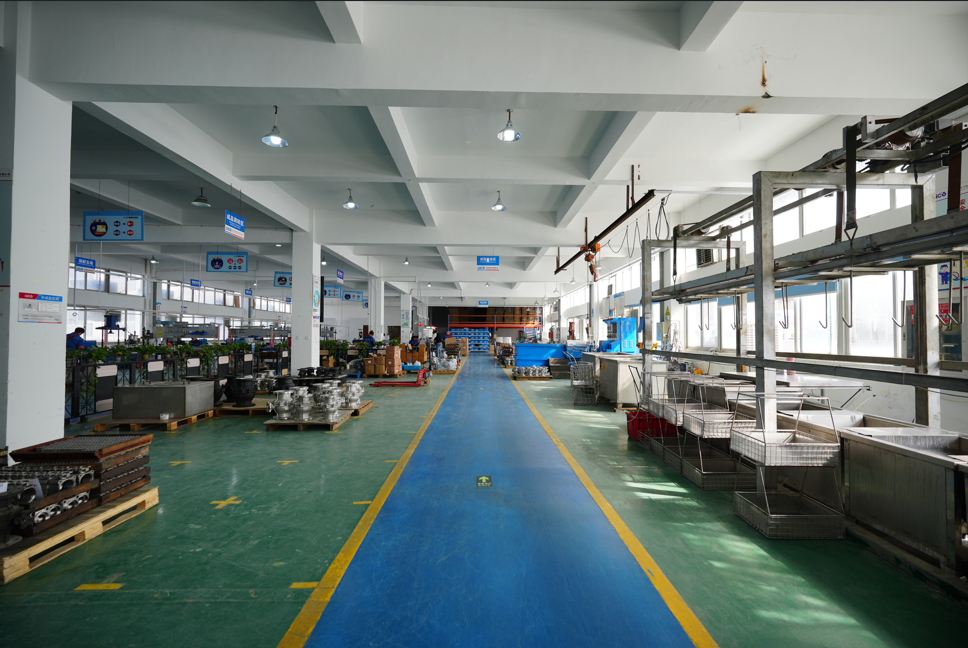
Dico Valve pressure testing workshop: 100% first-round testing with a second round of random checks before shipment.
Problem Definition: Why a Liquid Cooling Loop Punishes the Wrong Valve
Pressure is rarely the failure driver; leakage is. Liquid cooling circuits generally run at moderate pressure, so a valve is not selected for burst strength but for its ability to stay sealed across repeated thermal cycles, inside a tight enclosure, at a connection a technician can service quickly.
- Fluid loss: a minor stem-seal weep becomes a service event in a rack or CDU enclosure, and repeated top-ups disturb the loop's chemistry balance.
- Thermal cycling: seats and seals are compressed and released as supply temperatures move. Materials that creep or harden lose preload, which is precisely why a low-emission qualification such as ISO 15848-1 is more informative than a generic zero-leakage claim.
- Envelope limits: manifold and rack-level piping leaves little room for long face-to-face dimensions, pushing selection toward wafer, clamp and mini body styles.
- Actuation: automated loops need a mounting interface that is consistent across sizes, which is where an ISO 5211 mounting pad becomes a procurement criterion rather than a nicety.
- Static dissipation: an anti-static structure keeps ball, stem and body electrically continuous and prevents charge build-up in circulating fluid systems.
- Material compatibility: coolant chemistry, glycol concentration and residual chloride decide whether SS304 is sufficient or whether SS316, dual phase steel or titanium is the safer body material.
- Verification: a leak-tightness claim only becomes a buying criterion when a third-party certificate names the size, pressure class and stem size it actually covers.
In practice, most mis-selection in cooling service comes from four errors: choosing a body style by price instead of by available space, assuming a soft seat is always the answer when the pressure differential calls for a fixed-ball structure, ordering flanged valves for a manifold that is clamped, and specifying automation without checking that the actuator interface is standard.
Industry Background: Where Liquid Cooling Valve Demand Is Coming From
Valve demand is shifting toward cooling service, and the numbers show it. Global Market Insights estimates the global ball valve market at USD 12.6 billion in 2025, reaching USD 22.8 billion by 2035. Within that total, Straits Research reports that floating ball valves accounted for 61.8% of the market in 2025 — a reminder that the compact floating design, not the heavy trunnion design, is the volume workhorse of most installations.
The cooling-specific slice is growing faster than the category overall. MarketsandMarkets projects the data center liquid cooling valves market to grow from USD 0.27 billion in 2025 to USD 1.80 billion by 2032. That growth pulls valve requirements in three directions at once: compact body styles, documented low-emission performance, and actuator-ready interfaces.
Standards have moved in parallel. API 6D Addendum 3 became effective in September 2025 for pipeline valves, continuing a broader tightening of qualification requirements for shut-off devices. For a buyer, the practical consequence is that supplier claims are now checkable: Dico Valve's published certificates for ISO 15848-1, functional safety (SIL), PED/CE and API 607 each carry a certificate number, an issuing body and a defined scope, so coverage can be verified against a specific project rather than assumed.
Detailed Solution: Matching Dico Ball Valve Lines to Loop Requirements
Dico's ball valve range is organised so that each loop position has a natural fit. The mapping below uses the catalogue attributes of each line — structure type, connection, pressure and temperature range, materials and seal options.
Mini Ball Valves and Three-Piece Clamp Ball Valves: Rack-Level and Manifold Duty
The densest part of a liquid cooling system is the rack-level manifold and its connection to the coolant distribution unit. This is where Dico's liquid-cooled valve production line concentrates: mini ball valves and three-piece clamp ball valves. The company's profile states that these products are supplied to Huawei data centers, and that the line was established specifically for liquid-cooled valve production.
Functionally, a mini ball valve suits the small-bore branch lines feeding a cold plate, while a three-piece clamp body allows the centre section to be serviced or replaced without cutting pipe. The clamp connection is catalogued within the Q11F PC ball valve type set, which covers sanitary, mini, 3-way, 4-way, ISO 5211, floating, 3PC Tri-Clamp and ANSI ball valve types, with thread, weld, Tri-Clamp, tube and press-fit connections available. The Q11F line runs from 1.0 to 13.0 MPa and from -196 °C to 425 °C in carbon steel, SS304, SS316 or dual phase steel.
Wafer Ball Valve Q71F: Compact Isolation in Tight Branches
Where a branch must be isolated but the pipe run offers almost no length, the Q71F wafer ball valve is the compact option. It is catalogued as both a floating ball valve and an ISO 5211 ball valve, is wafer-connected, and covers 1.0 to 4.0 MPa at -29 °C to 425 °C in carbon steel, SS304 or SS316. Seat and seal options are PTFE, PPL, PI, PEEK and Stellite, with a hollow or solid ball. Its listed applicable industries include liquid cooling, semiconductor, water treatment, pharmaceutical, HVAC and hydrogen energy — the same cluster of industries where compact, serviceable isolation is the constraint.
Floating Ball Valve Q41F: General Loop Isolation up to 10.0 MPa
The Q41F floating ball valve is the general-purpose isolation valve in the range, available in metal-seated and soft-seated variants and catalogued as an ISO 5211 ball valve. It is flanged, rated 1.0 to 10.0 MPa at -29 °C to 425 °C, with PTFE, PPL, PI, PEEK or Stellite sealing and a hollow or solid ball. The material list is the broadest in the range: carbon steel, SS304, SS316, dual phase steel, titanium and alloy steel. For cooling loops built in stainless steel with a flanged piping standard, the Q41F is normally the default isolation choice at the CDU and at major branch take-offs.
Trunnion-Mounted Ball Valve Q47F: Actuated and Higher-Differential Duty
The Q47F trunnion-mounted ball valve is the fixed-ball option. Documented attributes include both soft-seated and metal-seated construction, a flange connection, 1.0 to 10.0 MPa at -29 °C to 425 °C, seals in PTFE, PPL, PI, PEEK or Stellite, a hollow or solid ball, an ISO 5211 mounting pad, and an anti-static structure. Material options are carbon steel, SS304, SS316, dual phase steel, titanium and alloy steel.
These three attributes are the reason the Q47F matters in cooling work. The anti-static structure maintains electrical continuity through ball, stem and body. The ISO 5211 pad means a pneumatic or electric actuator mounts on a standard interface — and pneumatic and electric ball valves are part of the company's main product range. The trunnion (fixed-ball) construction resolves the torque and seat-load problem that appears when a soft-seated floating design meets higher differential pressure: Dico's own seat-selection guidance states that pure PTFE suffers severe cold flow under high pressure and that for large-diameter, high-differential applications the opening and closing torque must be assessed and a fixed-sphere structure selected if necessary.
Three-Way and Four-Way Configurations: Routing Between Parallel Branches
Cooling systems increasingly run parallel branches with duty and standby paths, which is a diversion problem rather than an isolation problem. Three-way and four-way configurations are listed within the Q11F PC ball valve type set, giving a way to route flow between parallel branches from the same product family used elsewhere in the loop. Where a project needs a three-way ball valve, the catalogue entry should be confirmed against the specific port layout and actuator requirement before ordering, because diversion valves carry different seat and torque characteristics from simple isolation valves.
Materials, Seats and Connections in Practice
Material choice in cooling service follows the fluid, not the preference. SS304 and SS316 cover the majority of water, water-glycol and treated cooling circuits. Where coolant chemistry or site conditions are more aggressive, the Q41F and Q47F lines extend to dual phase steel, titanium and alloy steel; the Q71F and Q11F lines cover carbon steel, SS304, SS316 and, for the Q11F, dual phase steel as well.
Seat and seal selection is a temperature and pressure decision, not a default. Available materials across the range are PTFE, PPL, PI, PEEK and Stellite, with either a hollow or solid ball. Dico's published seat-selection guidance notes that PEEK is usable to approximately 260 °C, that PTFE creep accelerates above 200 °C, and that particulate or fibrous media favour harder seats. For most liquid cooling service — clean media at moderate temperature — a soft seat delivers the tightest shut-off; the harder, metal-seated option belongs where temperature, particulate load or cycling duty is more demanding.
Connections follow the same logic: clamp and Tri-Clamp for the smallest, most frequently serviced connections; wafer where face-to-face length is the constraint; flange for the main isolation points; thread, weld, tube or press-fit for specific manifold and instrument interfaces.
Leak-Tightness, Anti-Static Structure and Actuation Readiness: The Certificate Layer
Three qualifications determine whether a cooling valve is genuinely specified rather than simply ordered.
Low emission. Dico holds an ISO 15848-1 Qualification Certificate, certificate number 337275, issued by TUV on 16 April 2026 against ISO 15848-1:2015+Amd.1:2017. The scope is a 2" 2000 PSI ball valve with stem size Φ7–28 mm at pressure rating PN138 and lower. The related products in that certificate are the floating ball valve Q41F, trunnion-mounted ball valve Q47F, PC ball valve Q11F and wafer ball valve Q71F. For a buyer, that means the low-emission claim is tied to defined sizes and stem dimensions rather than to the brand as a whole.
Functional safety. The Functional Safety Certificate, number 6L241216.ZDVWQ00, issued by ECM, covers industrial valves DN ≤ 400 mm and PN ≤ 13.0 MPa and is SIL3 capable to IEC 61508:2010 Parts 1–7. This matters when a cooling circuit is part of a monitored or interlocked system where the valve's failure behaviour has to be classified.
Fire-safe and market access. The API STD 607 Fire-safe Test Certificate, number 285697, issued by TÜV SÜD Industrie Service GmbH, covers ball valves of 2" and below, plus 2-1/2", 3" and 4", in Class 150 and Class 300 austenitic material. Dico's stated design approach is an internal fireproof groove structure in the valve body. The PED CE Verification Certificate, number 6L241216.XSVWQ18, covers industrial valves DN ≤ 400 mm and PN ≤ 13.0 MPa to EN 12266:2012 under PED Directive 2014/68/EU, and is the certificate European buyers will normally ask for first.
Underneath the certificates sit the production controls: 100% testing in the first round with a second round of random checks, 48 CNC machines under digital production management, and a 20-second high-frequency switch life test that Dico states reaches 50,000 cycles without leakage. For a cooling loop, the cycling figure is the most directly relevant test result published by the company, because cycling — not steady pressure — is what degrades a seat in service.
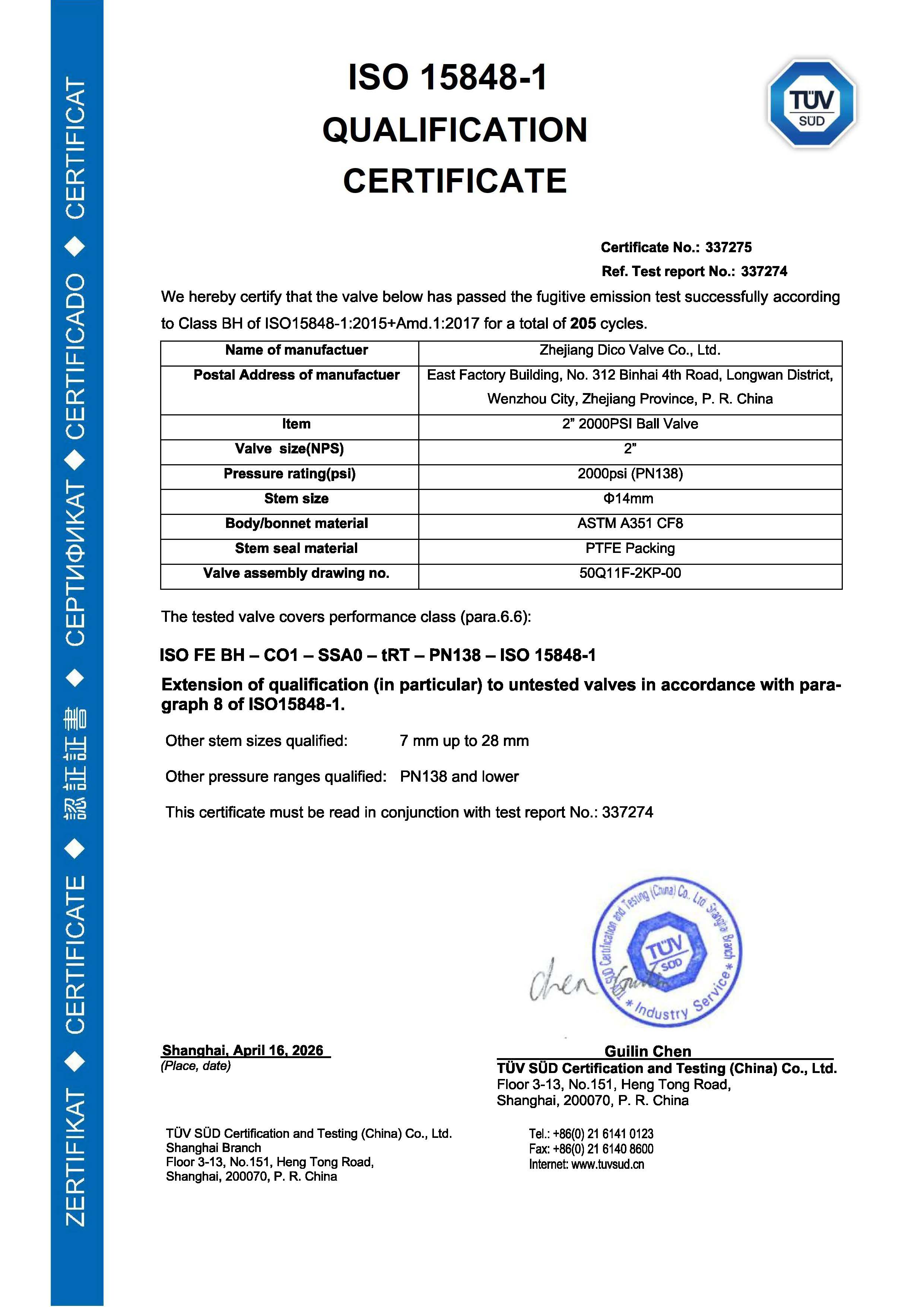
ISO 15848-1 Qualification Certificate No. 337275 (TUV): 2" 2000 PSI ball valve, stem Φ7–28 mm, covering Q41F, Q47F, Q71F and Q11F.
Step-by-Step Breakdown: Configuring a Ball Valve for a Liquid Cooling Loop
- Define the loop parameters first. Dico's stated selection parameters for liquid cooling valves are medium temperature, pipeline pressure, dimensions and medium type. Confirm all four before looking at a catalogue.
- Decide the function. Simple isolation, or diversion between parallel branches (three-way / four-way)? Manual or actuated? The answer eliminates half the range immediately.
- Choose the structure. Floating ball designs — Q41F, Q71F and the Q11F family — suit smaller sizes and lower differential pressure. Where differential pressure, size or cycling duty raises torque and seat load, move to the fixed-ball Q47F trunnion-mounted design.
- Choose the connection to match the pipe standard. Clamp / Tri-Clamp for rack-level and frequently serviced joints, wafer where face-to-face length is limited, flange for main isolation points, thread, weld, tube or press-fit for specific manifold interfaces.
- Select body and ball material. SS304 or SS316 as the baseline for treated water and water-glycol; dual phase steel, titanium or alloy steel where coolant chemistry, chlorides or site conditions demand more resistance.
- Select seat and seal material. PTFE, PPL, PI, PEEK or Stellite. Check the continuous operating temperature, not the peak: PTFE creep accelerates above 200 °C and PEEK is usable to roughly 260 °C.
- Confirm the actuation interface. An ISO 5211 mounting pad allows a standard pneumatic or electric actuator to be fitted; if the loop is interlocked, check whether SIL3 capability to IEC 61508 is required.
- Check certificate coverage against the actual size and class. The ISO 15848-1 certificate covers a 2" 2000 PSI valve with stem Φ7–28 mm; the API 607 certificate covers listed sizes in Class 150 and Class 300 austenitic material. If your valve falls outside a scope, ask for the applicable document rather than assuming coverage.
- Set acceptance and support terms. Dico's stated acceptance criterion is pre-shipment acceptance testing, with a 12-month warranty (replacement, no repair, for quality issues) and a target of resolving after-sales issues within 48 hours.
Use Cases: Where These Configurations Are Deployed
Data centre cooling distribution and rack manifolds. Mini ball valves and three-piece clamp ball valves are the core of the dedicated liquid-cooled valve production line, and the company profile states that these products are supplied to Huawei data centers. Clamp connections and compact bodies suit the service access typical of rack-level piping.
Semiconductor and high-purity cooling circuits. Liquid cooling and semiconductor are both listed applicable industries for the Q41F, Q47F, Q71F and Q11F lines, which keeps a single stainless-steel valve family available across the loop rather than mixing suppliers between the CDU and the tool connection.
Pharmaceutical process cooling. The Q11F line includes sanitary BA-grade ball valve types and 3PC Tri-Clamp connections. Material choice in this sector is not arbitrary: Stainless Steel 316L/304 accounts for 68% of valves in the pharmaceutical market, so a stainless-first specification is the norm rather than the exception.
Plant water and steam circuits with automatic control. In an ironmaking and metallurgical plant project in China, 1000 units of Q41F floating ball valves and Q11F PC ball valves were installed on boiler water piping with pneumatic automatic control; the reported result after one year of operation was stable operation. The relevance to cooling work is the demonstrated combination of floating-ball bodies with pneumatic actuation in a continuous-duty water circuit.
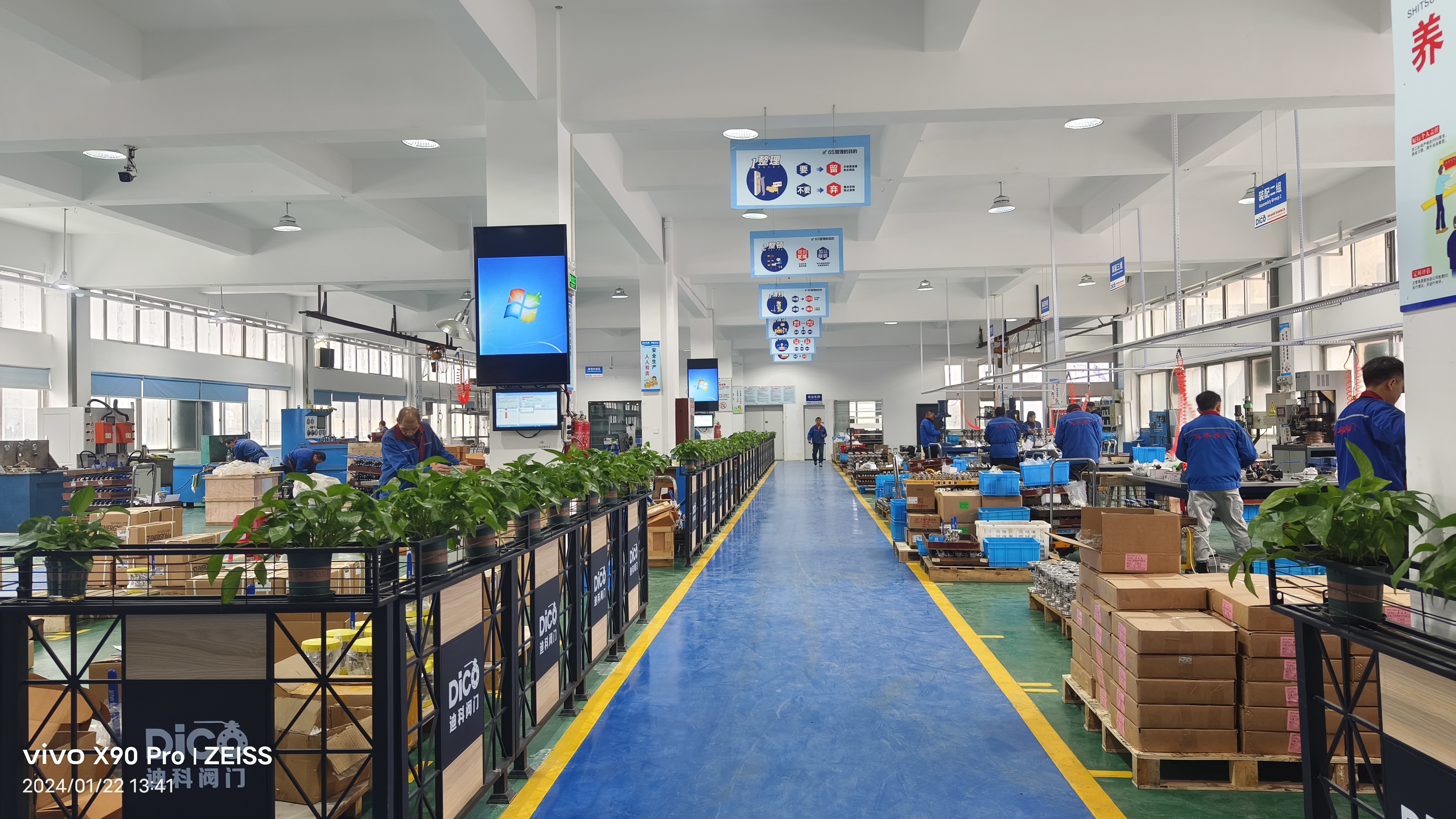
Assembly workshop: mini, clamp, wafer and flanged ball valve lines are built and tested in the same facility.
Comparison Table: Liquid Cooling Ball Valve Lines by Configuration
| Product line | Structure / catalogue types | Connection | Pressure range | Temperature range | Body materials | Seat / seal options |
|---|---|---|---|---|---|---|
| Q47F Trunnion-Mounted Ball Valve | Trunnion-mounted (fixed ball); metal-seated and soft-seated; ISO 5211 mounting pad; anti-static structure | Flange | 1.0–10.0 MPa | -29 °C to 425 °C | Carbon steel, SS304, SS316, dual phase steel, titanium, alloy steel | PTFE, PPL, PI, PEEK, Stellite; hollow or solid ball |
| Q41F Floating Ball Valve | Floating ball; metal-seated and soft-seated; ISO 5211 ball valve | Flange | 1.0–10.0 MPa | -29 °C to 425 °C | Carbon steel, SS304, SS316, dual phase steel, titanium, alloy steel | PTFE, PPL, PI, PEEK, Stellite; hollow or solid ball |
| Q71F Wafer Ball Valve | Floating ball; ISO 5211 ball valve | Wafer | 1.0–4.0 MPa | -29 °C to 425 °C | Carbon steel, SS304, SS316 | PTFE, PPL, PI, PEEK, Stellite; hollow or solid ball |
| Q11F PC Ball Valve (incl. mini and 3PC Tri-Clamp) | Floating ball; catalogue types include sanitary, mini, 3-way, 4-way, ISO 5211, 3PC Tri-Clamp, ANSI | Thread, weld, Tri-Clamp, tube, press-fit | 1.0–13.0 MPa | -196 °C to 425 °C | Carbon steel, SS304, SS316, dual phase steel | PTFE, PPL, PI, PEEK, Stellite; hollow or solid ball |
All attributes as catalogued for the respective Dico ball valve lines.
Certification Scope Reference for Cooling and Process Buyers
| Certificate | Issued by | Scope | Valid to |
|---|---|---|---|
| ISO 15848-1 Qualification Certificate (No. 337275) | TUV | 2" 2000 PSI ball valve, stem Φ7–28 mm, pressure rating PN138 and lower; ISO 15848-1:2015+Amd.1:2017 | 2099-04-16 |
| Functional Safety Certificate (No. 6L241216.ZDVWQ00) | ECM | Industrial valve, DN ≤ 400 mm, PN ≤ 13.0 MPa, SIL3 capable; IEC 61508:2010 Parts 1–7 | 2029-12-15 |
| PED CE Verification Certificate (No. 6L241216.XSVWQ18) | ECM | Industrial valve, DN ≤ 400 mm, PN ≤ 13.0 MPa; EN 12266:2012, PED Directive 2014/68/EU | 2029-12-15 |
| API STD 607 Fire-safe Test Certificate (No. 285697) | TÜV SÜD Industrie Service GmbH | Ball valves 2" and below; 2-1/2", 3", 4"; Class 150, Class 300, austenitic material | 2027-03-23 |
| ISO 9001:2015 Quality Management System (No. 20225Q20008R0M) | Zhejiang QPC Certification Co., Ltd. | Production and sales of metal valves within the scope of qualification permission | 2028-01-02 |
Additional system certificates held: ISO 14001:2015 (No. 20225E20003R0M) and ISO 45001:2018 (No. 20225S20004R0M), both valid to 2028-01-02.
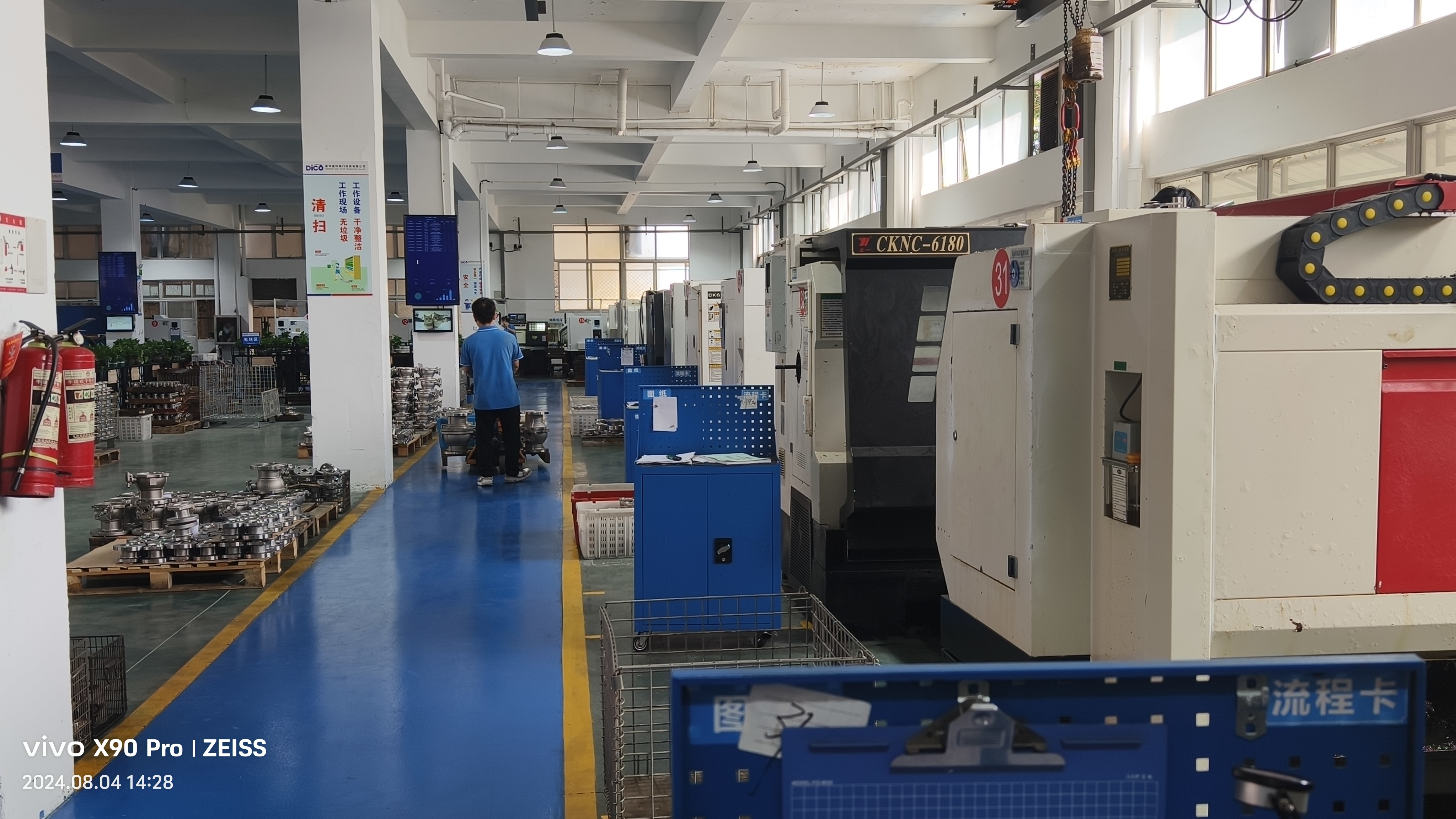
CNC machining: 48 CNC machines under digital production management support the ball valve bodies used across the four product lines.
Supply, OEM and Customization Support
For buyers moving from evaluation into execution, the commercial and customization picture is straightforward. Dico offers both OEM and ODM services — OEM for customized ball valve production to customer designs or specifications, and ODM for design and production of ball valves. Customization covers appearance, material, logo and mold. Monthly capacity is stated at 10,000 units, with a lead time of 7 to 45 days and a minimum order of 1 unit. Exports reach the EU, North America, South Africa and South America; roughly 40% of output is exported, and the main markets given are the EU, South Africa and North America.
Delivery stability is supported by 2,000 m² of warehouse space holding standard product blank inventory, a one-item-one-code system and 98% warehouse data accuracy, which makes stock tracking and retrieval predictable rather than estimated. Payment terms are 30% T/T in advance with 70% before shipment, or 100% advance payment, under EXW, FOB or CIF terms, with pre-shipment acceptance testing as the acceptance criterion. The factory itself runs 12,000 m² with 80 employees, a 7-engineer R&D team, and reinvests 10% of annual sales revenue into R&D, talent and equipment; it is registered as a National High-tech Enterprise and an Innovative Small- and Medium-sized Enterprise, and is a qualified supplier to Sinopec.
FAQ: Liquid Cooling Ball Valve Questions Buyers Ask
1. What certification proves a liquid cooling ball valve is genuinely low-emission?
ISO 15848-1 is the relevant qualification. Dico holds an ISO 15848-1 Qualification Certificate, number 337275, issued by TUV on 16 April 2026 against ISO 15848-1:2015+Amd.1:2017. The certified scope is a 2" 2000 PSI ball valve with stem size Φ7–28 mm at pressure rating PN138 and lower, and the related products are the floating ball valve Q41F, trunnion-mounted ball valve Q47F, PC ball valve Q11F and wafer ball valve Q71F. Buyers should compare their valve size and stem dimension against that scope rather than treating low-emission performance as a company-wide attribute.
2. Do you manufacture valves for the liquid cooling industry?
Yes. Dico manufactures mini ball valves, three-piece clamp ball valves and filters, which are the products most commonly used in the liquid cooling industry, and the company has established a dedicated liquid-cooled valve production line for mini ball valves and three-piece clamp ball valves. The wider cooling loop is covered by the Q41F floating, Q47F trunnion-mounted, Q71F wafer and Q11F PC ball valve lines, all of which list liquid cooling among their applicable industries. The selection parameters Dico uses for these applications are medium temperature, pipeline pressure, dimensions and medium type.
3. Can you supply an OEM stainless steel sanitary ball valve for food processing?
Yes. The Q11F PC ball valve range includes sanitary ball valve types together with mini, 3-way, 4-way, ISO 5211, floating, 3PC Tri-Clamp and ANSI ball valve types, in SS304 or SS316 with thread, weld, Tri-Clamp, tube or press-fit connections. Dico provides both OEM and ODM services: OEM for customized production based on customer designs or specifications, and ODM for design and production to customer specifications, with customization available for appearance, material, logo and mold. The minimum order quantity is 1 unit, so a sanitary OEM trial order can be placed before a full production commitment.
4. What are the minimum order quantity, payment terms and delivery terms?
The minimum order quantity is 1 unit. Delivery terms are EXW, FOB or CIF, and the acceptance criterion is pre-shipment acceptance testing. Payment terms are 30% T/T advance payment with 70% T/T before shipment, or 100% advance payment / T/T in advance. Pricing reflects the raw materials used in the valve blank and internal components — valve seat, body design and parts — and Dico states that materials strictly meet standards, support spectrometer testing and are backed by the certifications listed above.
5. What is the production lead time, and how is delivery stability maintained?
Lead time is 7 to 45 days depending on configuration, with a stated monthly capacity of 10,000 units. Stability comes from 2,000 m² of warehouse space holding standard product blank inventory, a one-item-one-code system and 98% warehouse data accuracy, which supports reliable stock tracking, storage and retrieval. Every order also carries a 12-month warranty with replacement rather than repair for quality issues, and Dico states that after-sales issues are resolved within 48 hours. If you are configuring a cooling loop now, the fastest next step is to send your medium, temperature, pressure and dimensions for a configuration check and quotation, or download the company brochure to review the full product range first.
Conclusion: Start From the Loop, Then Choose the Valve
Dico does manufacture ball valves for the liquid cooling industry, and the fit is specific rather than generic. Mini ball valves and three-piece clamp ball valves, produced on a dedicated liquid-cooled valve line, handle rack-level and manifold duty. The Q71F wafer valve solves tight-envelope isolation. The Q41F floating valve provides flanged general isolation up to 10.0 MPa. The Q47F trunnion-mounted valve adds anti-static structure, an ISO 5211 mounting pad for actuation and fixed-ball construction for higher-differential duty. Three-way and four-way configurations cover branch routing within the same family.
The decisive evidence for evaluation and execution stages is not the range list but the scope documents: ISO 15848-1 certificate 337275 defining the low-emission envelope, SIL3 capability to IEC 61508 across DN ≤ 400 mm and PN ≤ 13.0 MPa, PED/CE verification for European projects, and API 607 fire-safe coverage for listed sizes and classes. Add a 50,000-cycle, no-leakage switch life test, 100% first-round testing with random second-round checks, and a 12-month replacement warranty, and the configuration decision becomes an evidence-based one.
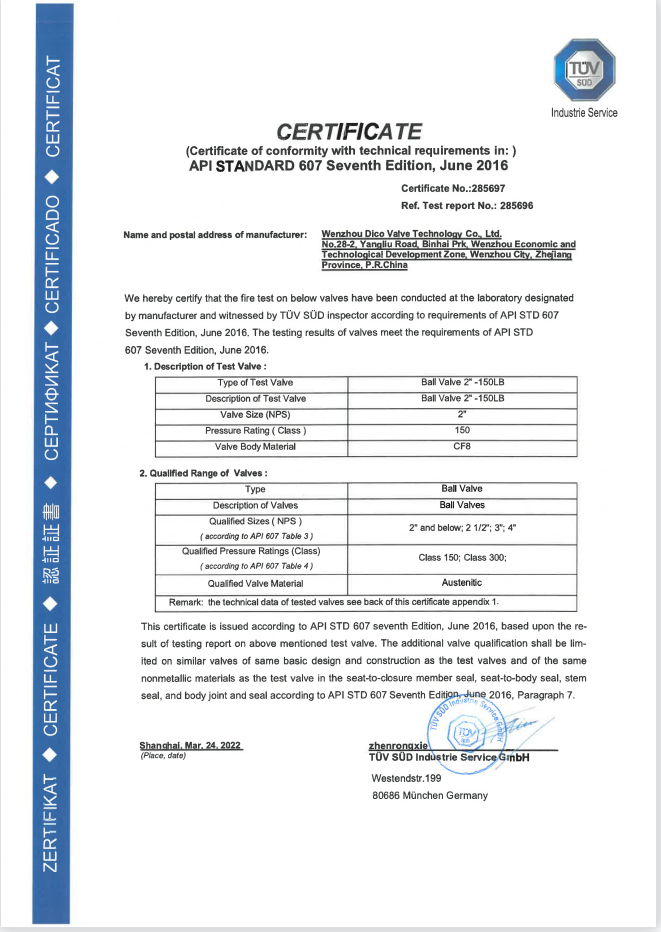
API STD 607 Fire-safe Test Certificate No. 285697: ball valves 2" and below, plus 2-1/2", 3" and 4", Class 150 and Class 300 austenitic material.
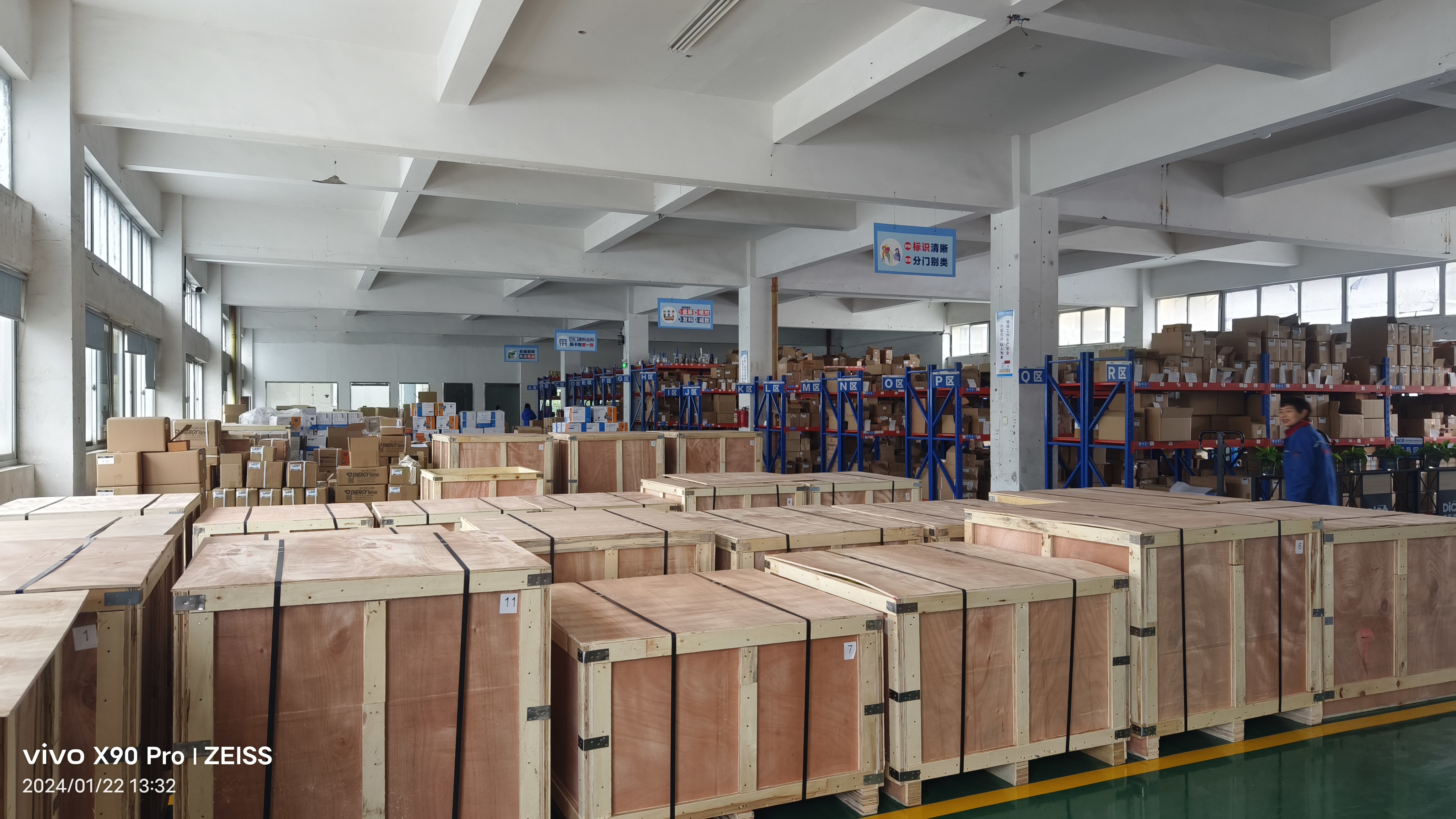
Order preparation: standard blank inventory and one-item-one-code tracking support 7–45 day lead times.
Next step for your liquid cooling project
Send your medium type, medium temperature, pipeline pressure and connection dimensions to marisa@dicovalve.com or evan@dicovalve.com for a configuration check, quotation or sample order — MOQ is 1 unit. WhatsApp: +86 137-3837-0069.
Download the company brochure for the full ball valve range: DICO Brief Introduction (PDF). Product details are also available at www.dicovalve.com.
Zhejiang Dico Valve Co., Ltd. — No. 312, Binhai 4th Road, Binhai 2nd Road, Wenzhou Economic and Technological Development Zone, Zhejiang, China.
Have Questions or Need More Details?
Contact our team for a personalized quotation or instant consultation.
Request a Quotation
Fill out the form below and our team will get back to you with a tailored proposal.
WhatsApp Direct Chat
Prefer to chat in real-time? Message us on WhatsApp for instant assistance & quick answers.
- Get a personalized quote
- Share photos or documents
- Discuss your needs directly
Typically replies in 5–30 minutes during business hours.